
ARAF II’s first close: public capital with different roles
ARAF II’s reported first close, funding through an FMO-managed Dutch government fund and separate technical assistance show different public-capital roles.
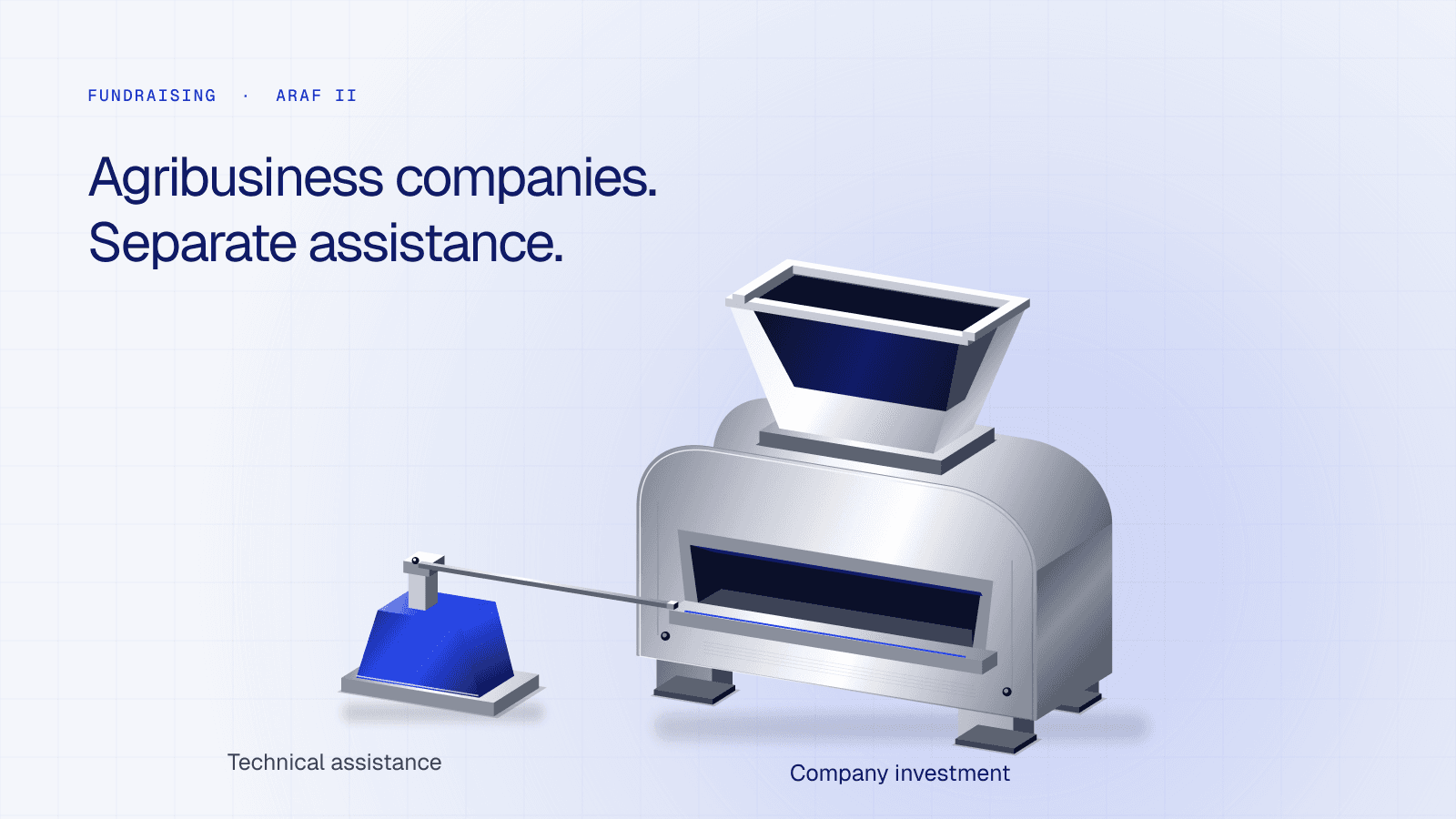
ARAF II had reached a USD 64.5 million first close by FMO’s July 16 announcement. The Dutch development bank’s USD 12.5 million commitment came through Building Prospects, a Dutch government fund that FMO manages. That funding route matters: identifying the institution announcing a commitment does not, by itself, identify whose capital it is deploying.
The disclosed strategy directs capital toward agribusinesses serving smallholders. For an LP, farmer resilience is a stated objective; the commercial exposure lies in those businesses. GCF’s separate technical-assistance facility adds capability support without making that support interchangeable with returnable fund capital.
The investor name and the funding mandate
FMO names Acumen Capital Partners, a wholly owned Acumen subsidiary, as manager. It identifies GCF and Proparco as returning investors and Swedfund, BIO and FASA as new investors. Proparco separately announced a USD 12 million commitment. Swedfund’s project record describes another USD 12 million commitment as indirect equity and dates signing to July 2026; the page was published on September 15 and updated on October 7.
Those separate records help characterize the investor base. They are not additional amounts to stack on top of the USD 64.5 million first-close figure. Nor do the disclosed commitment amounts establish calls, disbursements or a common share class. For a GP comparing potential funding sources, the Building Prospects route is more informative than treating FMO’s name as evidence of an unrestricted balance-sheet allocation.
FMO’s project entry also needs to be read using its own terminology. It displays “Approved investment,” while the map legend places that label under “Disclosure of contracted investments.” This is evidence of FMO’s contracted stage, rather than an approval-only pipeline entry. The record separately gives a July 6, 2026 effective date; it does not supply ARAF II’s exact first-close day.
Equity in the businesses serving farmers
The investment exposure runs through agribusinesses. FMO says ARAF II will invest in businesses providing smallholders with access to markets, finance, agricultural inputs and advisory support. The GCF project description identifies venture, early and early-growth companies offering bundled adaptation solutions.
For an institutional analyst, that shifts the underwriting question toward the companies’ services and business models. A provider of farmer finance and a business aggregating agricultural output can both address smallholder needs, but their revenues, operating demands and risks need separate examination. A farmer-reach objective does not make the fund equivalent to a direct agricultural loan portfolio.
Investment capital and assistance do different jobs
GCF’s project page describes its USD 30 million equity contribution within a USD 120 million fund financing structure. It separately describes grant support for a technical-assistance facility, intended to support investee companies and farmers through climate resilience, gender considerations, impact measurement and business development. The USD 120 million structure is not a second completed-close announcement.
The funding proposal dated November 26, 2024 supplies a further distinction. Its target capital structure separates junior equity requested from GCF from senior equity. It presents the proposed first-loss role as a way to attract more return-focused capital. That is the proposal’s financing rationale, rather than evidence of the executed waterfall or of the class held by FMO or Swedfund.
The distinction is commercially important. Capital with a proposed loss-absorbing role and assistance that supports portfolio-company capabilities address different parts of a fund’s investment case. A recognizable DFI roster alone cannot tell an incoming LP where it would sit in loss allocation, what support the portfolio can use, or which terms it would receive.
A first close within a longer financing process
GCF’s timeline separates board approval on October 24, 2024, FAA execution on July 2, 2026, and effectiveness on July 6, 2026. FMO’s July 16 release supplies the reported first-close amount. Those dates describe different institutional events; none establishes when portfolio companies received capital.
An LP comparison of ARAF II should pair the manager’s agribusiness-company strategy with a prospective fund interest’s loss allocation, return rights and the intended role of portfolio assistance. FMO’s commitment is funding through an FMO-managed Dutch government fund; GCF’s older proposal explains a separate risk-capital rationale. The funding mandate is therefore part of the economic comparison, while executed fund terms remain necessary to establish a new investor’s rights.