Altss Research
Private Markets3 min read
PSERS’s Newmarket approval: who receives credit protection?
PSERS’s October 2026 approval concerns Newmarket credit protection and a separately scoped co-investment recommendation.
Altss ResearchNov 14, 2026
Category
132 articles on private markets from the Altss research team.
PSERS’s October 2026 approval concerns Newmarket credit protection and a separately scoped co-investment recommendation.
Golub’s International 16 disclosures distinguish its fund structure from co-investment conditions and investor exposure.
Bridgewater’s 2026 filings connect fund disclosures without reconciling financial scope or conflicting jurisdiction details.
June 2026 examples from FS KKR and Ares separate reported non-accrual portfolio weights from cash recovery results.
Pfizer and Moderna illustrate different timing for development funding, expense relief and contingent investor payments.
Wendel’s internal fee and AUM disclosures distinguish an advisory service from an external fund commitment.
Partners Group's French infrastructure fund distinguishes E/S characteristics from sustainable investments. Apply an illustrative 25% mandate test.
An illustrative continuation-fund rollover shows how a lower management-fee rate can cost more, and how to calculate the break-even fee base.
A transaction-by-transaction look at Ardian’s semiconductor portfolio, with practical questions about business exposure and ownership rights.
How to use the Fed’s new private-credit survey to frame direct-lending manager questions and evaluate the evidence behind an explanation.
A contract-by-contract reading of the Unum–Fortitude LTC closing, its retained obligations and the evidence needed for investor diligence.
CalSTRS and CalPERS illustrate different cost measures. A worked example shows how to reconcile profit sharing with investment returns.
FCERA increased private credit capacity and retained Aksia after a fee review. The implications for institutional fundraising.
Caruna’s deferred buyer payment and Tarchon’s continuing developer funding show why infrastructure transaction cash has a closing calendar.
Humanity AI’s sponsor, founding partners and grant rules distinguish a charitable AI collaboration from commercial seed funding.
Caledonia and RIT disclosures show how new-manager commitments coexist with shareholder payments, with a worked cash-planning example.
A permit-based analysis of Justified Data Campus, with two funding scenarios and a daily water-withdrawal example.
CalPERS OHA accounts show how similar private-credit multiples can conceal different cash returns. Worked examples explain IRR and reinvestment.
Use Carlyle and Invesco ELTIF documents to connect subscription dates, redemption limits and settlement with a client cash reserve.
NYSTRS’s Q3 private-debt commitment ceilings split 35% to new manager relationships and 65% to incumbents. See the financing roles behind them.
Harvard and Yale both reported returns above 26% in fiscal 2026. Their unfunded commitments moved in opposite directions, with implications for GP fundraising.
Stonegate’s September 2026 announcements detail manager selection, committee-led oversight and separate co-investor decisions, funding and execution.
CZI selects external investment managers as well as backing companies and funding nonprofits. Its endowment programme, Somite round and grant terms serve distinct purposes.
Emerson participated in Emerald AI’s $150m Series A. Yosemite separately reported over $18m in grants; the disclosures identify different recipients and funding routes.
Audax’s September notice reports equity sales. Separate SEC disclosures identify a lending mandate and distinguish offering sales from NAV and portfolio value.
Liverpool’s 1892 consortium includes a sports fund and family office. Seattle’s completed Khosla acquisition brings institutional minority investors alongside family control.
Companies House, SEC and EIF policies draw different lines around research documents. Compare creator, distribution, collection and disclosure terms before reuse.
Galaxy Helios II’s notes imply $3.489bn of issue cash before fees. The indenture explains reserves, construction uses and contingent completion funding.
Twelve of 14 finite Q3 fund notices reported zero remaining, but sales equalled 10.9% of stated offering amounts. Play and WHCG explain the concentration.
PI Opportunities Fund-II bought about ₹200 crore of SBI Funds shares. The prospectus and Wipro’s filings separate legal buyer, relationship and proceeds.
Seventeen dated pooled-fund notices had a six-day median first-sale-to-filing interval; six reported first sales before Q3. A fixed 30-notice sample explains the denominator.
Three 2026 Form D notices yield two Q3 records under either date field, but different funds. Exact filings reveal the change in membership and sale status.
Micron’s fiscal 2026 accounts separate US$3.316bn of incentive proceeds, US$6.43bn in asset reductions and US$4.9bn of conditional U.S. commitments.
AES Ohio’s July 2026 proposal combines data-center minimum payments, exit fees and rated guarantees, with specific construction-cost and ratepayer protections.
FNZ’s US$450m equity raise backs platform investment, while its bank-sale agreement concerns two operating businesses. Sale proceeds remain undisclosed.
Stark Novus’s Affinity deal combined parent shares, a 15% subsidiary stake and an insurance-linked earnout. September filings reconcile cash and valuation.
Tenmile is a returning investor in AdvanCell’s closed July financing. Its clinical programme and US manufacturing plan show what the capital supports.
All Seas II USD’s October amendment reports $100m sold with a euro-denominated minimum. Its company-financing strategy and earlier fund scale add separate context.
DigitalOcean’s $725 million equipment facility combines a company cash contribution, a one-year draw period and a shared 2030 repayment endpoint.
RWA’s planned move separates family-office trust, estate and tax services from Private Wealth adviser teams. How the acquired business would operate.
Exor’s H1 report shows how €302m of investments, €490m of disposals and Lingotto strategy allocations connect cash activity with asset values.
DLP Preferred Credit’s Q3 debt and equity notices report different minimums. Current $200,000 fund and note summaries also describe different claims.
Three Q3 Blackstone and CVC notices explicitly report no first sale. A dated Partners Group control shows why zero sold alone selects a different set.
ChronoScale’s Microsoft deployment pairs two expected 2027 GPU deliveries with acceptance-linked refunds, major procurement commitments and a still-negotiated facility lease.
APERS’s HarbourVest summary exempts a $26.5m addition from fees and carry. Its fund, tranche and liquidity disclosures show which capital each term covers.
Carlyle’s credit venture expanded portfolio financing, added a capital-call line and repaid mezzanine debt. Its June accounts show the balances and cost.
EIB's APIS record pairs a €66.81m signature with indicative finance. Its English, French and German fields show which figures and dates belong together.
Primo Biotech Lazio pairs regional biotech company creation with public and pension backing, distinct from the manager’s existing healthcare SME private equity.
NYCRF’s captive-account disclosure separates its US$155m 57 Stars commitment from underlying funds, with important limits on reconciliation and available capital.
HBK’s proposed H.I.G. investment separates CPA-owned audit services from other advisory work while retaining an existing wealth-management provider.
AEP Texas’s federal transmission loan ties advances to project costs, separates draw availability from maturity and preserves the utility’s repayment duties.
atNorth’s acquisition separates Partners Group’s Directs seller from its Secondaries investment, alongside Equinix’s equity and prospective capacity commitment.
The bank’s Advent Fund IV and Growth Fund commitments address different development stages, alongside a separate first-time-manager programme route.
Connecticut’s 2026 PE and credit plans separate $550m of projected HarbourVest deployment from fund commitments and proposed secondary-fund subscriptions.
Envestnet’s proposed Vestmark acquisition combines trading and tax tools with VAS advisory services. Platform assets, advisory AUM and client contracts have distinct scopes.
Horizon’s LSA purchase serves advisory firms; Creative Planning’s RVK agreement targets institutional consulting, with closing expected in January 2027.
Vesterra’s partners bought AMG’s minority stake in September 2026. The roughly $12 million receipt also included fund investments, limiting valuation comparisons.
QIA’s published criteria require a Qatar presence while keeping local investments subject to commercial viability. What that means for a GP’s mandate.
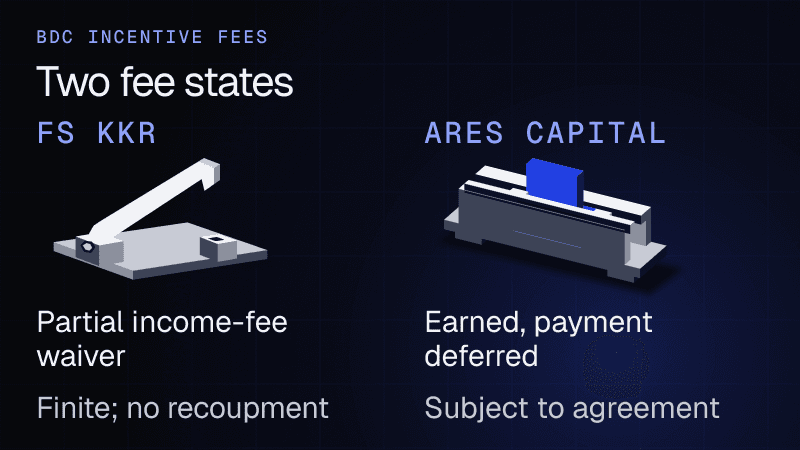
Ares Capital deferred earned fees and reversed a GAAP accrual. FS KKR’s adviser waived fee entitlement. June 30 reports separate expense from adviser cash compensation.
AIB’s September 2026 Texas purchase separates site control, a $6 million utility-linked price installment and two letters of credit with different beneficiaries.
Bessemer’s September growth capital can back companies beyond its seed portfolio. Crane’s four-vehicle raise presents a different regional and opportunity-fund question.
Rich Forever’s InvestHK profile identifies an MFO service platform. Assisted-business counts and survey exposure explain different parts of Hong Kong’s family-capital market.
Ares’s June 30, 2026 ACE IV and V disclosures distinguish levered and unlevered Euro IRRs and explain financing, currency and feeder boundaries.
Invus joined Caspian’s $50m financing. Kura’s $4.3m investment, contributed IP and 49.2% equity position explain the difference between a round and a stake.
MAS's SFO count, S$6.7tn industry AUM and private-bank growth describe different populations. What those measures mean for family-office research.
Global Defense Offshore’s Q3 Form D amendments show $19.85 million more reported sales, while indefinite offering amounts leave no percentage-funded denominator.
Bisonti’s September rebrand connects Investcorp’s GP-stakes business to its existing adviser and March ISCP II fund and co-investment commitments.
Ontario Teachers’ 2025 report reconciles a shrinking Level 3 balance with continued purchases, separating valuation movements from future commitments.
Ventures Platform’s Fund II added $20m and new institutional LPs between announcements 293 days apart. The dates describe public milestones, not legal close days.
Connecticut’s 2026 private-capital RFP shows how recommendation duties, fiduciary wording and a separate manager-approval path define different roles.
Machine’s reported primary capital rose 42.3%, versus 3.5% across stated fund and co-investment figures. Alpaca illustrates an inclusive fundraising total.
NYCRF's €40m MCP and $75m Awani commitments show how a stated FX date and rate direction create a comparable view while preserving original amounts.
Brighteye’s Fund III first close adds named LPs as its learning-and-work mandate expands. The disclosed relationships establish participation, not LP shares.
APRA's June 2026 figures put ART and AustralianSuper near A$6.5bn each in Private Debt, but at portfolio weights of 1.71% and 1.44%, respectively.
Digital Realty’s June 2026 buyout disclosures separate cash and share consideration, acquisition accounting, development spending and issuer versus seller equity proceeds.
UDR’s 2026 apartment acquisitions show preferred-equity liquidation, loan settlement and mortgage repayment producing different ownership and cash outcomes.
CoreWeave’s June 2026 filing links early principal payments to subsidiary collateral, parent guarantees and concentrated customer cash flows.
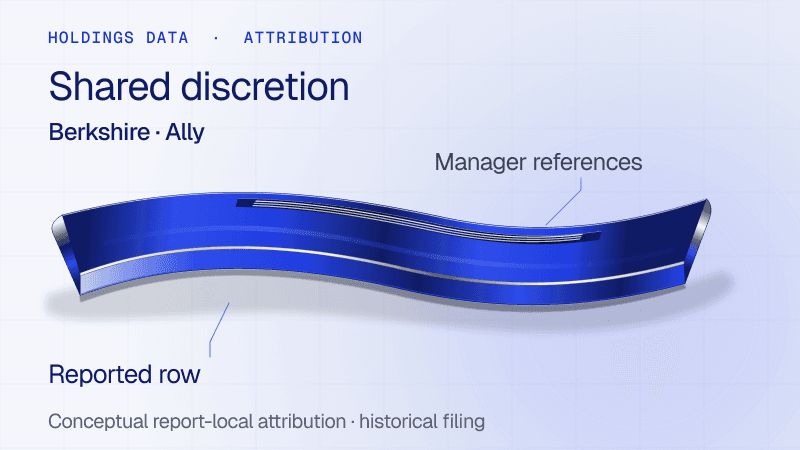
Berkshire’s six Ally rows and National Indemnity’s notice show how reporting links and manager attribution affect holdings counts without establishing ultimate ownership.
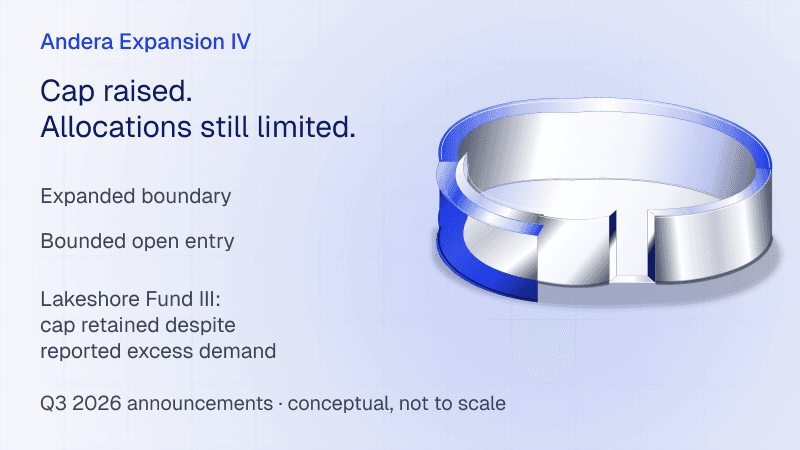
Andera raised its cap and still limited allocations; Lakeshore retained its cap despite excess demand. Their mandates explain the different choices.
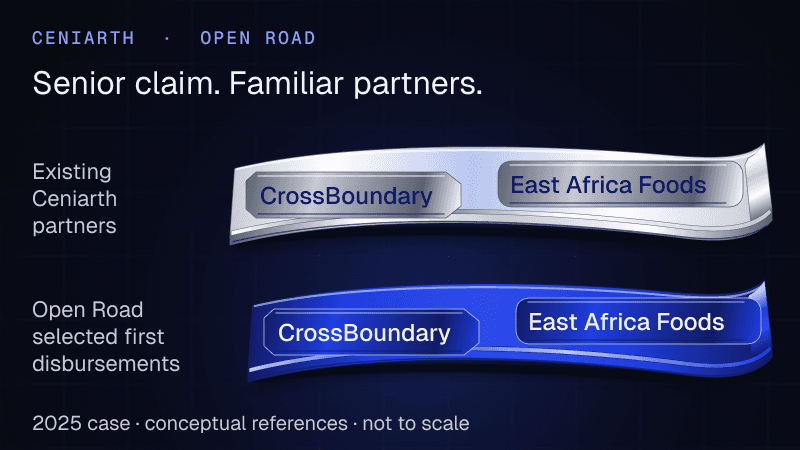
Ceniarth’s 2025 cases disclose a priced senior commitment, repeated enterprise exposure, dual tranches and an outside guarantee behind one impact mandate.
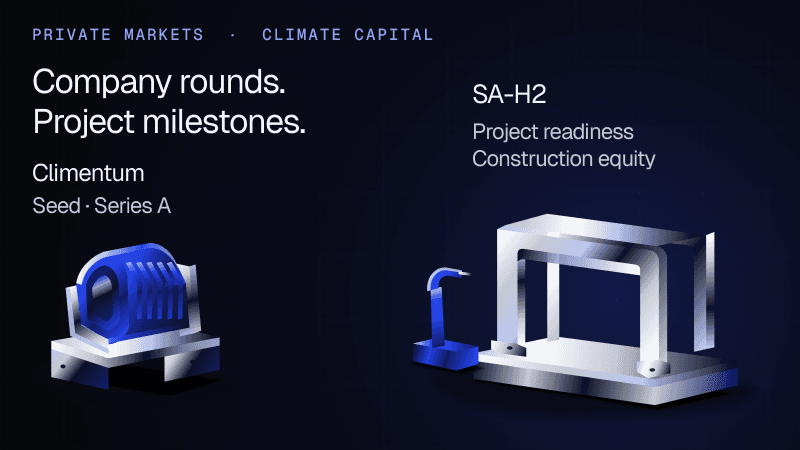
Climentum’s company-stage mandate and SA-H2’s development and construction tranches show the investment jobs behind two Q3 2026 climate first-close announcements.
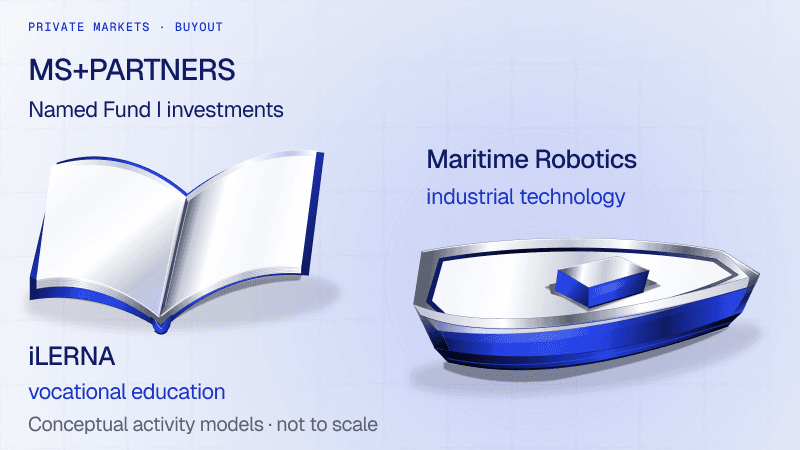
MS+PARTNERS’ buyout Fund I names institutional backers at its September first close. COFIDES’s €30 million FIS disclosure adds a Spanish-company purpose.
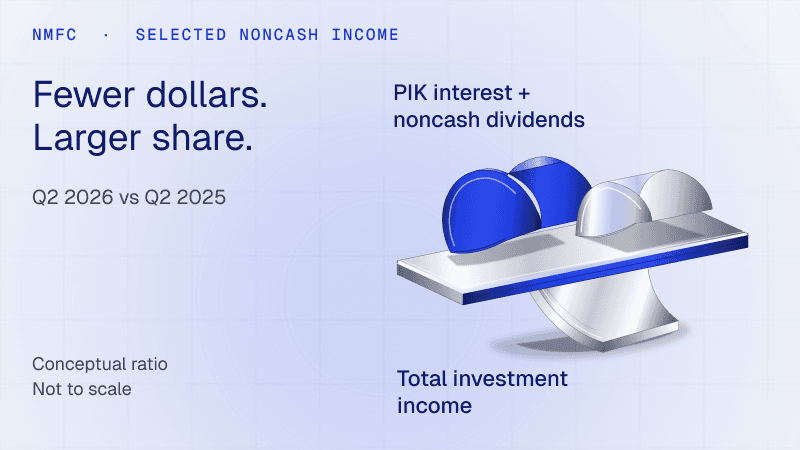
NMFC’s Q2 2026 filing shows how PIK interest, noncash dividends and income denominators change a BDC earnings comparison.
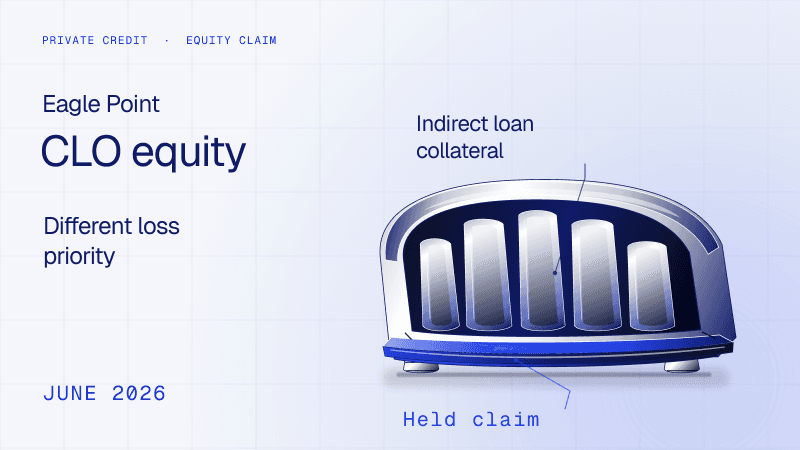
Eagle Point’s June 2026 portfolio separates CLO-equity exposure, senior-secured underlying loans and fund financing, with distinct income and cash-flow measures.
Ferd’s 2025 fund disclosures separate mandate roles, reference-index performance and USD/NOK reporting, with a distinct climate fund and co-investment route.
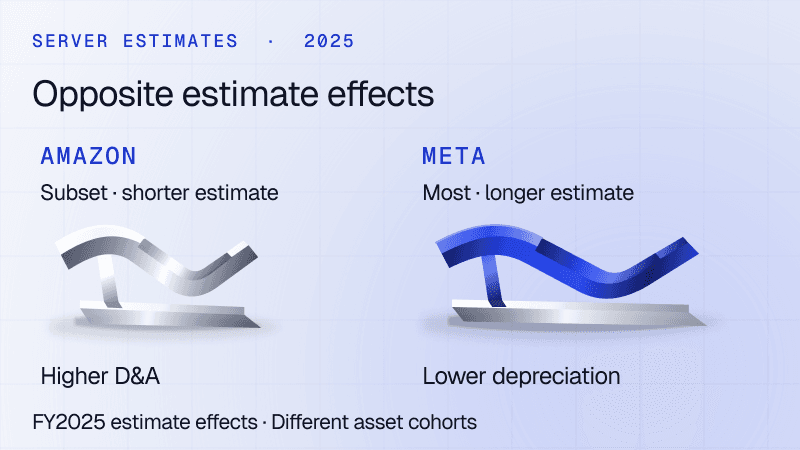
Opposite 2025 depreciation revisions at Amazon and Meta show why equipment cohorts, reported earnings and cash capital requirements need separate analysis.
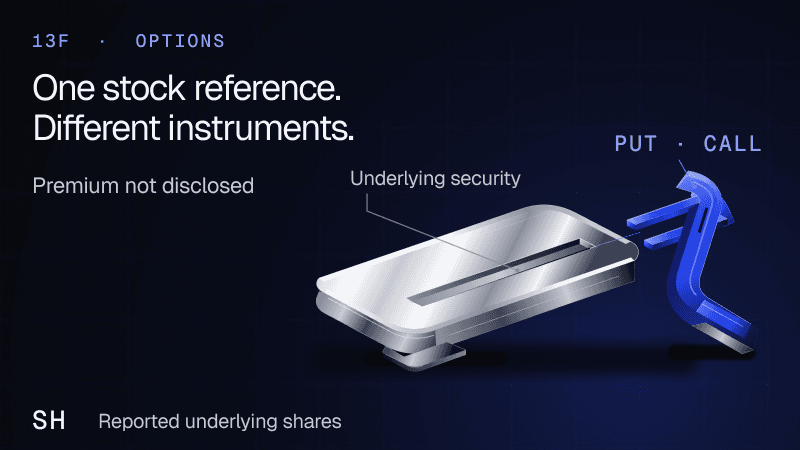
Two Citadel option rows show why reported underlying-security values and SH quantities do not disclose premiums, contract counts or net economic exposure.
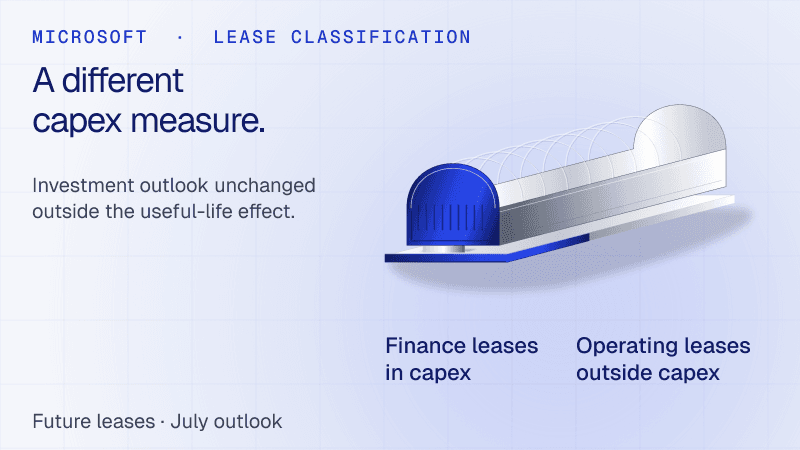
Microsoft’s July disclosures separate capex, cash PP&E and operating leases. The classification change need not mean an equivalent cut in investment.

IP Lab, Oxford Venture Fund and Penn StartUP disclose different company eligibility: research origin, university scope and founder affiliation.
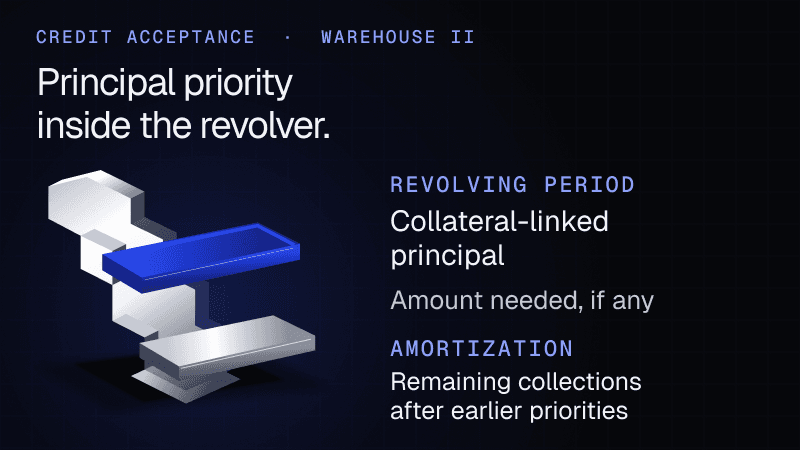
Credit Acceptance’s Warehouse II renewal leaves collateral and collections tests governing advances and principal payments throughout the revolving period.
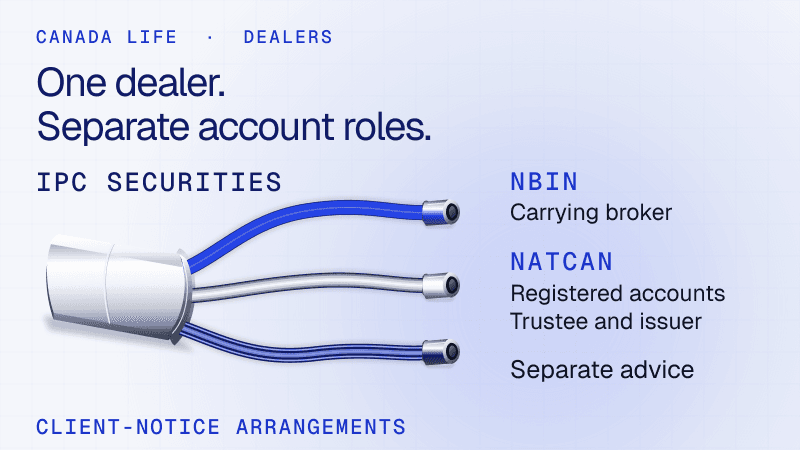
IPC Securities became the surviving dealer. Canada Life’s client notice separates the carrying broker and registered-account trustee from investment decisions.
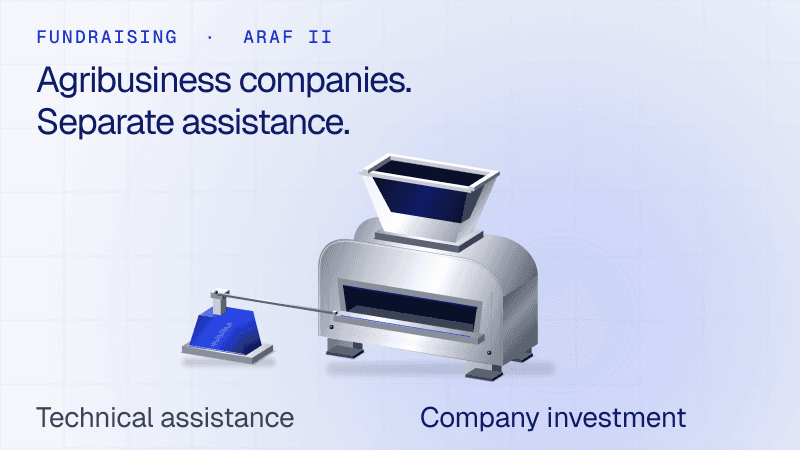
ARAF II’s reported first close, funding through an FMO-managed Dutch government fund and separate technical assistance show different public-capital roles.
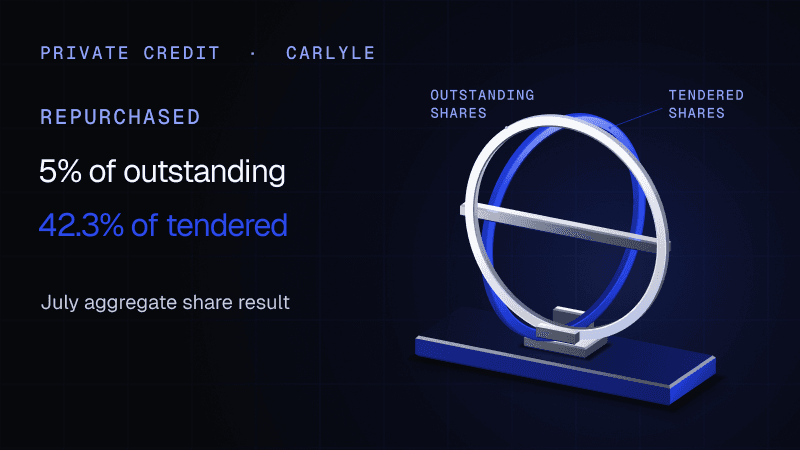
Carlyle’s July 2026 repurchase filled 42.3% of tendered shares. Its filed results show why that improved ratio came with a smaller reported payout.
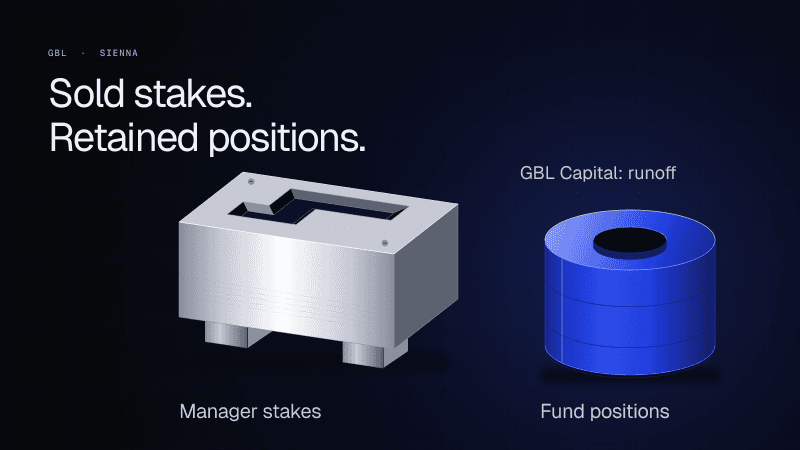
GBL’s Sienna management-business disposals left fund investments inside GBL Capital. Its runoff policy changes the meaning of those continuing relationships.
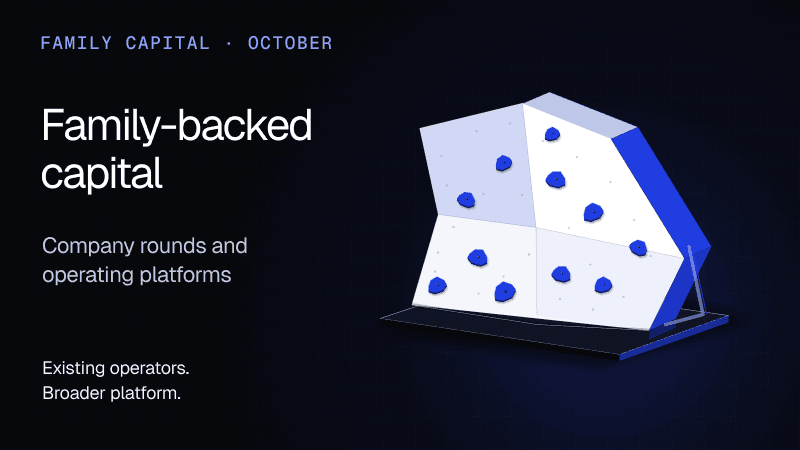
October 1–15 announcements show Oetker Ventures in Hadrian, Artal in Universal Quantum and Verlinvest forming an operating platform.
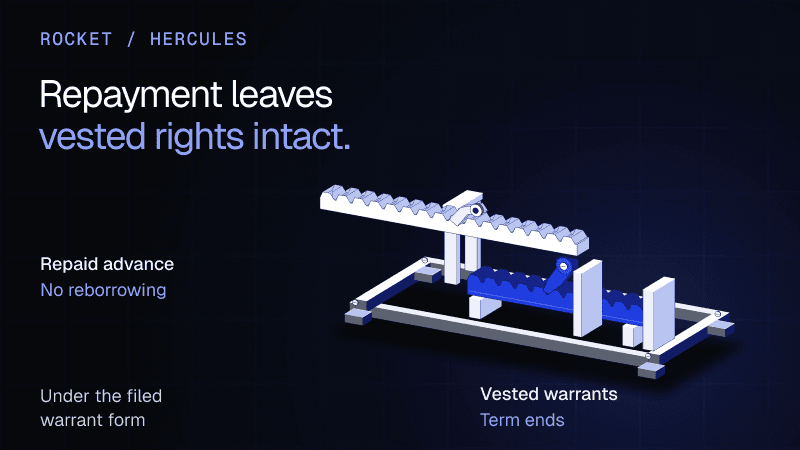
Rocket’s September 30 financing links clinical milestones to principal timing. Repaid advances cannot be reborrowed, while vested warrant rights remain.
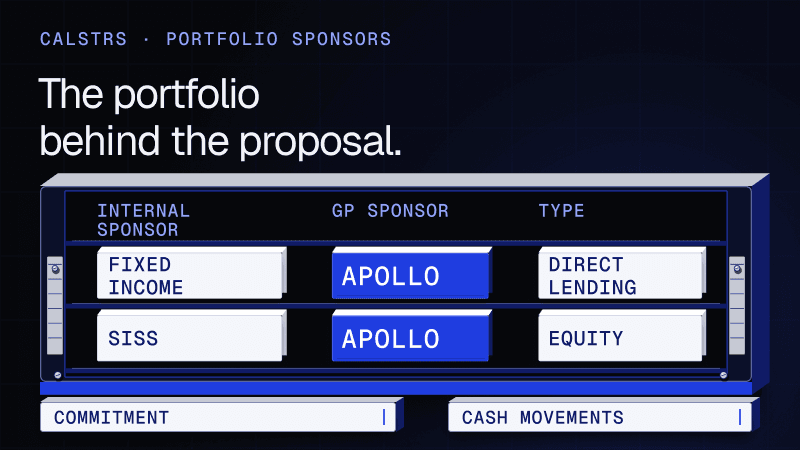
CalSTRS’s H1 2026 commitments and public policies distinguish internal sponsors, named GP relationships and approval of commitments from later funding.
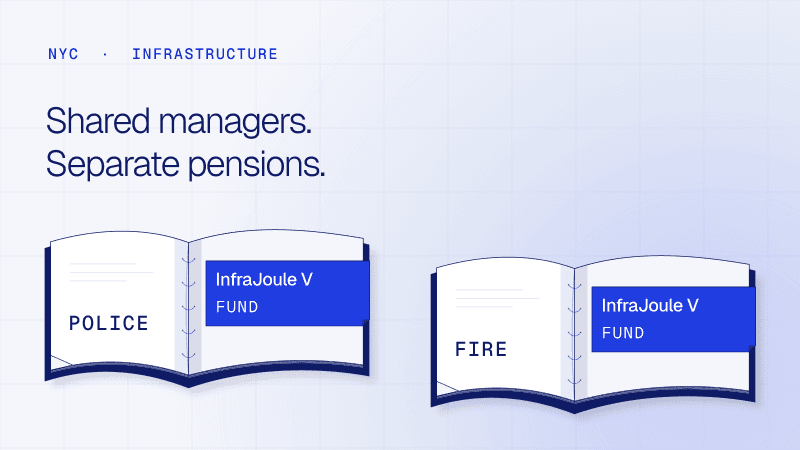
Sandbrook, GIP and InfraJoule records identify separate NYC pension relationships and distinguish combined commitments from individual system amounts.
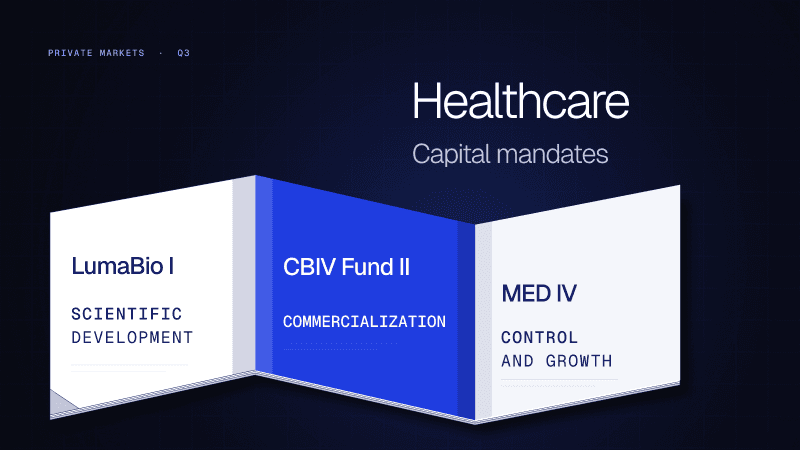
Compare LumaBio I, CBIV Fund II and ARCHIMED MED IV: scientific development, health-technology commercialization and control-led healthcare growth.
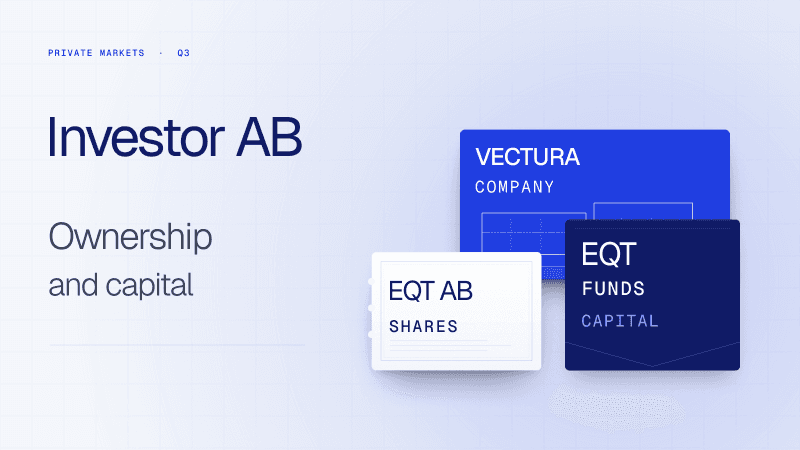
Investor AB’s Q3 2026 capital uses connect Patricia company reinvestment, its EQT shareholding and fund funding. Each calls for a different investment case.
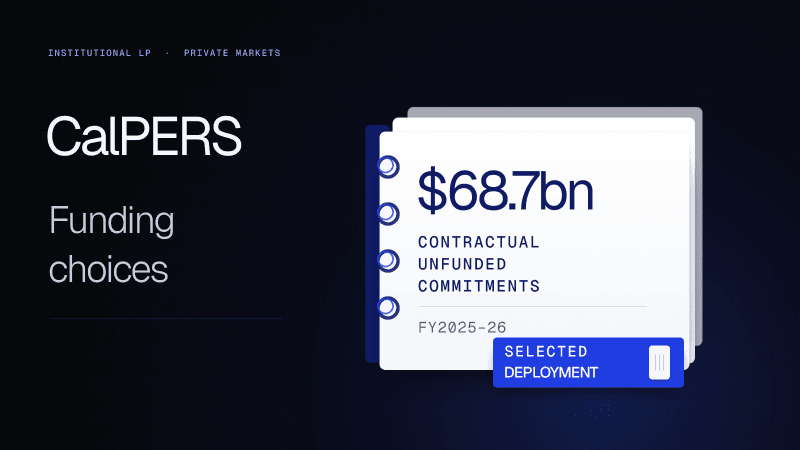
CalPERS’ FY2025–26 reports connect private-market commitments, funding liquidity and the shift to TPA, showing how a mandate fits the whole fund.
HarbourVest and Hamilton Lane show how a GP’s company-capital approach differs from an LP’s mandate selection, with the vehicle and approval authority in view.
TCPC’s equity-sale proceeds and Bridgepoint’s LP elections show how Q3 credit continuation deals changed liquidity, retained exposure and funding obligations.
KKR, Partners Group and CIP reached Q3 final closes with portfolios already taking shape. Their actual investments reveal different operating and development exposures.
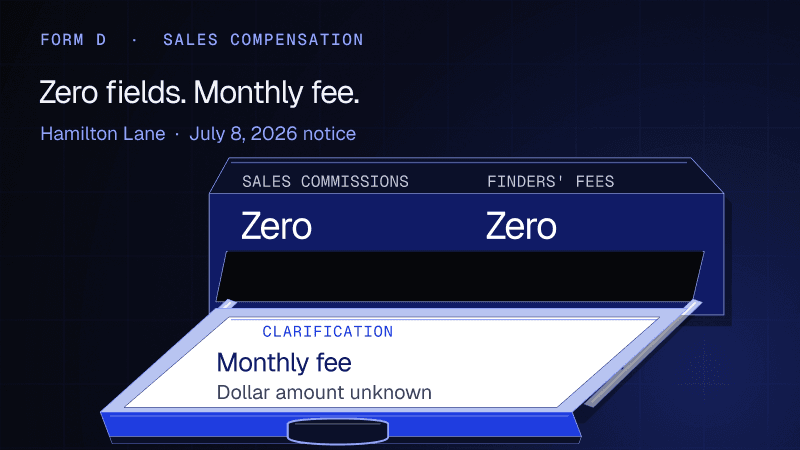
Four Q3 2026 fund notices separate zero commission fields from manager-paid services, undetermined placement fees, affiliate compensation and management economics.
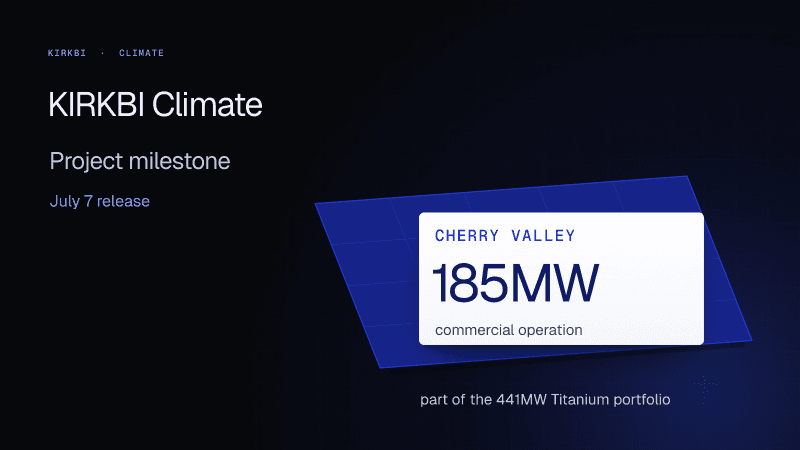
KIRKBI Climate owns businesses and invests in specialist funds. Separate its five-year plan from the DKK 81 billion financial portfolio and historical capital uses.
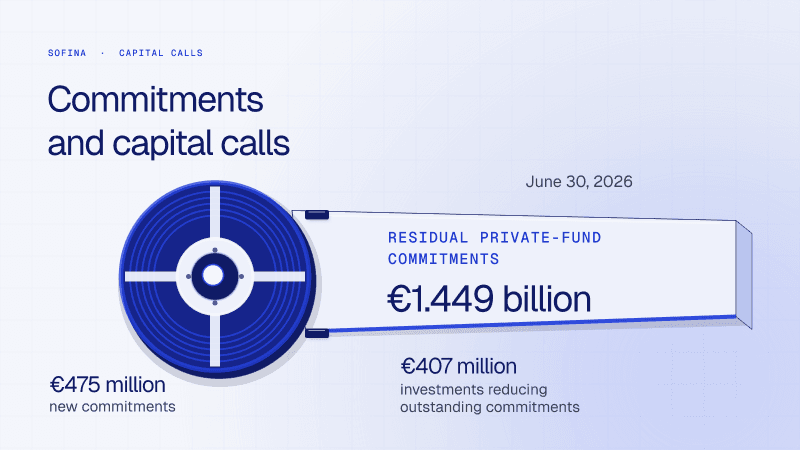
Sofina’s H1 2026 fund-value growth differs from cash deployment and uncalled commitments. Reconcile the cash-flow, valuation and obligation bridges.
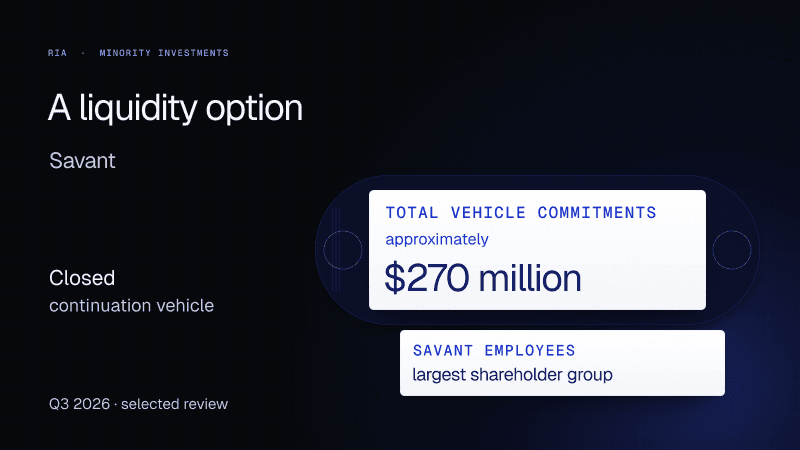
Six Q3 wealth-management cases separate growth financing, sponsor liquidity and exits, with employee ownership, control and transaction stage kept distinct.
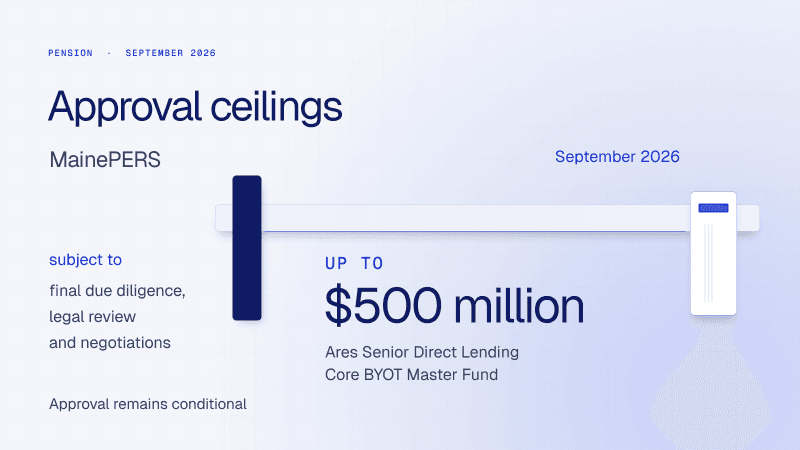
MainePERS, Connecticut, SamCERA and LACERA records separate conditional commitments, rollovers, co-investments and deployment control.
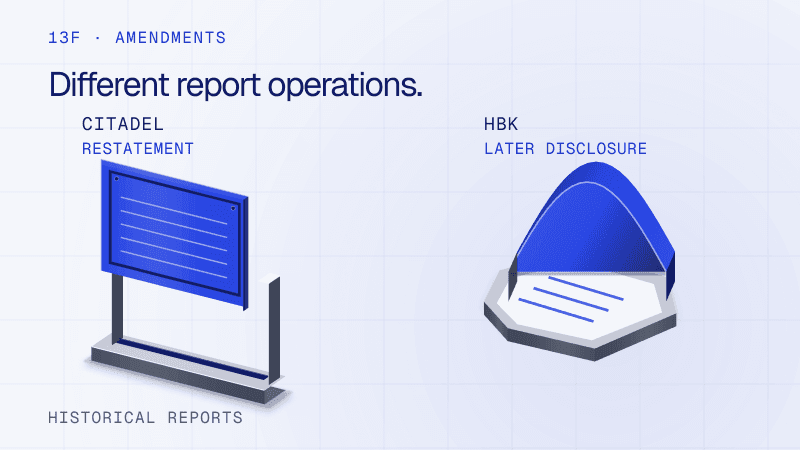
13F restatements and additions need different dataset operations. Exact Citadel and HBK filings show reporting-period and entry-count boundaries.
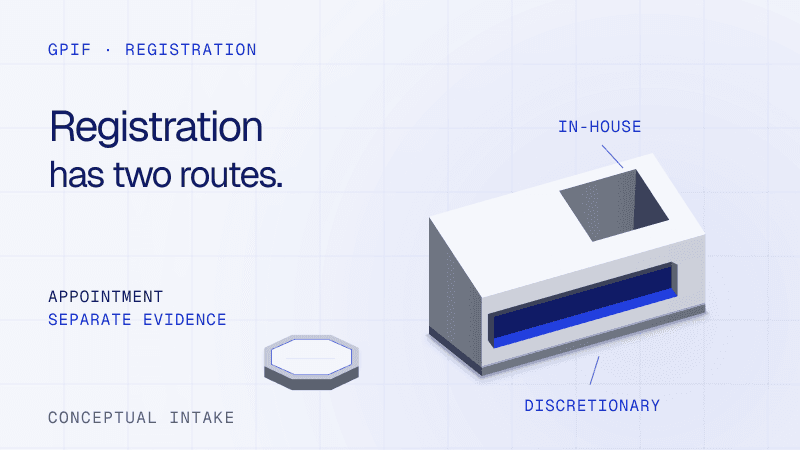
GPIF originals explain two alternatives manager-registration routes, eligibility and selection authority, without treating registration as an awarded mandate.
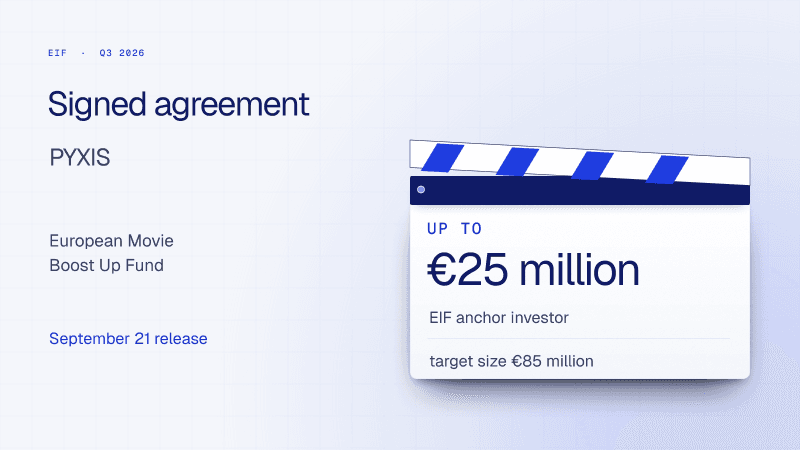
Three Q3 EIF releases distinguish a signed agreement, a pledge and a July fund close disclosed in September, preserving targets and commitment ceilings.
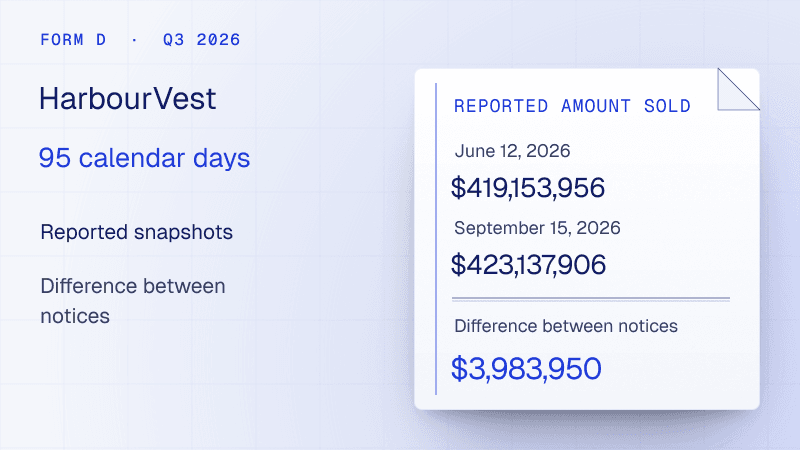
Two Q3 fund amendments are compared with their explicitly linked predecessors, preserving reported-sales differences, dates and the limits of a fundraising-flow inference.
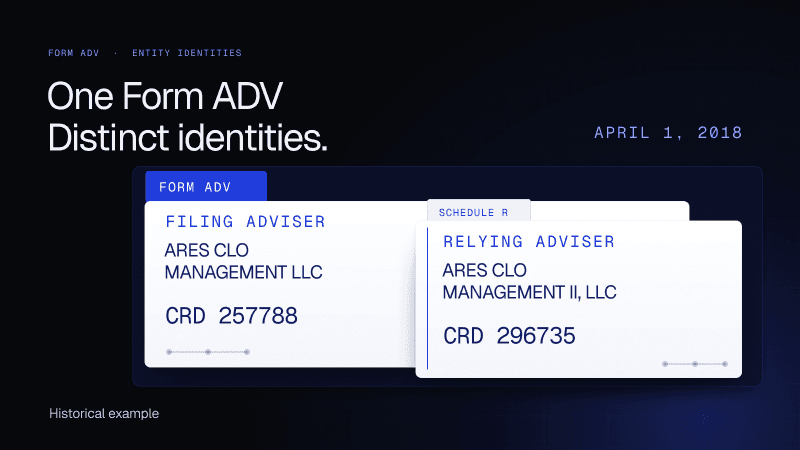
Use original SEC instructions and a clearly dated ADV example to distinguish filing advisers, relying advisers and registration identities without double counting.
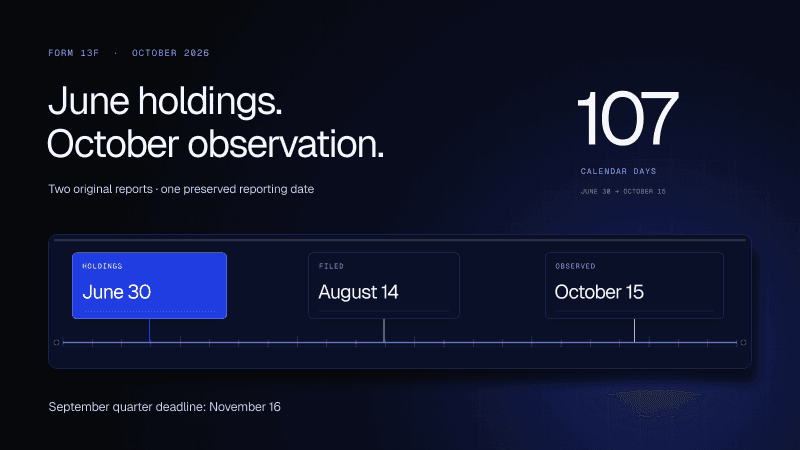
Original Q2 filings and current SEC guidance explain holdings dates, filing dates, the Q3 deadline and what an October 13F observation can establish.
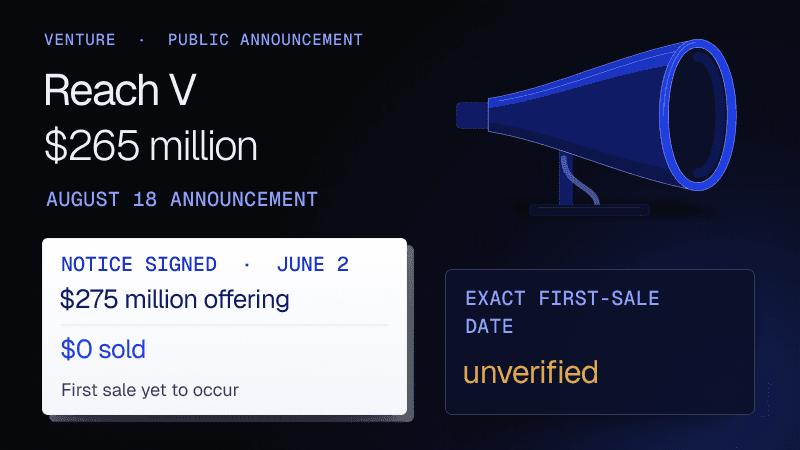
Accel, Micron and Reach announcements compared with original sources, separating public launches, vehicle counts, offering ceilings and first-sale evidence.
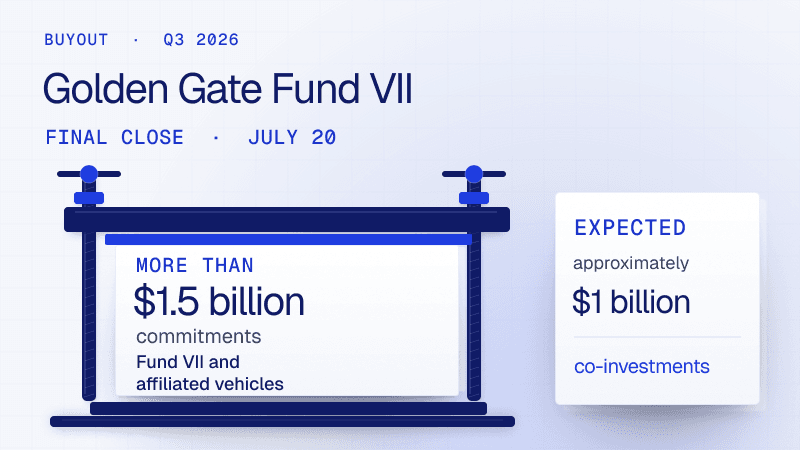
Three Q3 buyout final-close announcements compared with original sources, separating third-party LP commitments, GP capital and expected co-investment.
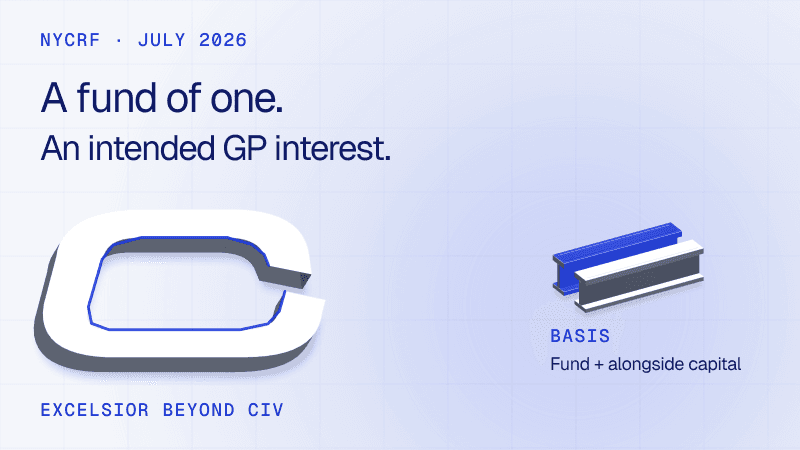
July 2026 NYCRF records distinguish fund commitments, co-investments, follow-ons and GP stakes, with dollar and euro amounts counted separately.
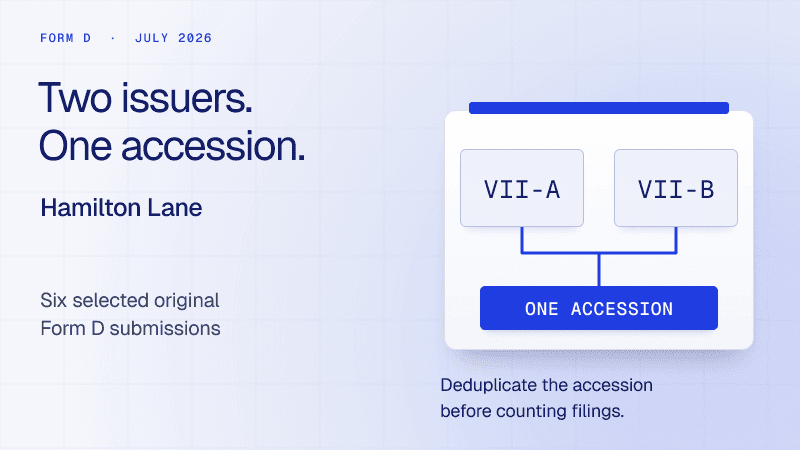
July 2026 SEC fund notices compared using original filings, with first-sale dates, reported sales and shared-issuer boundaries kept separate.
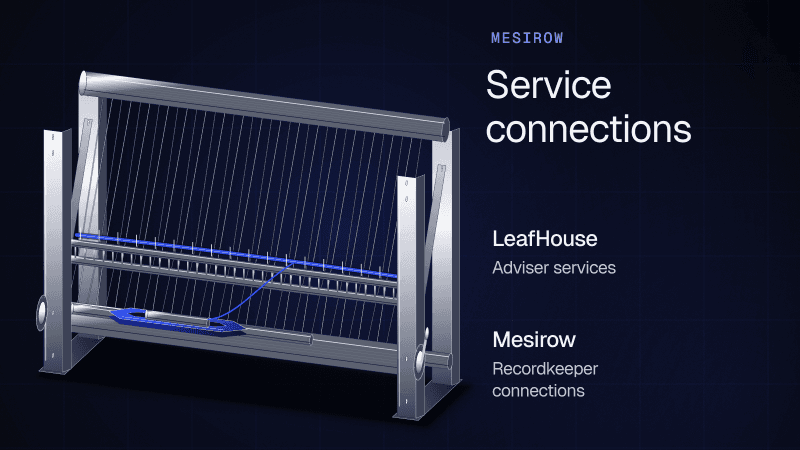
Original Mesirow announcements distinguish the completed LeafHouse advisory deal from the flexPATH agreement, technology investment and platform asset definitions.
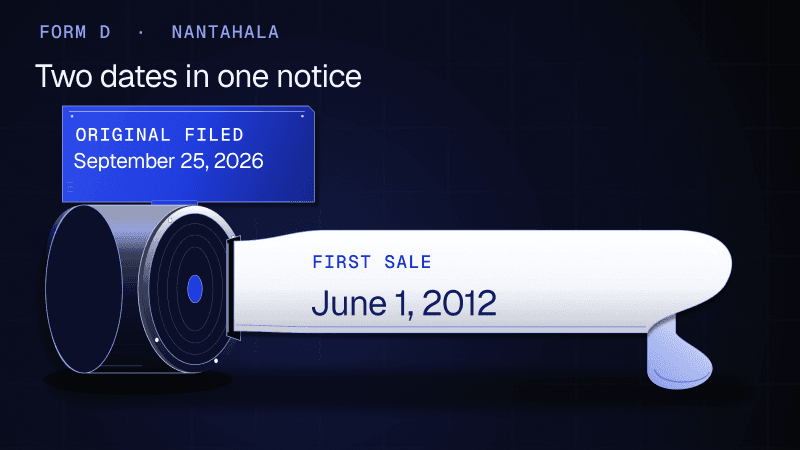
September 2026 SEC fund notices compared using original filings, with first-sale dates, reported sales and shared-issuer boundaries kept separate.
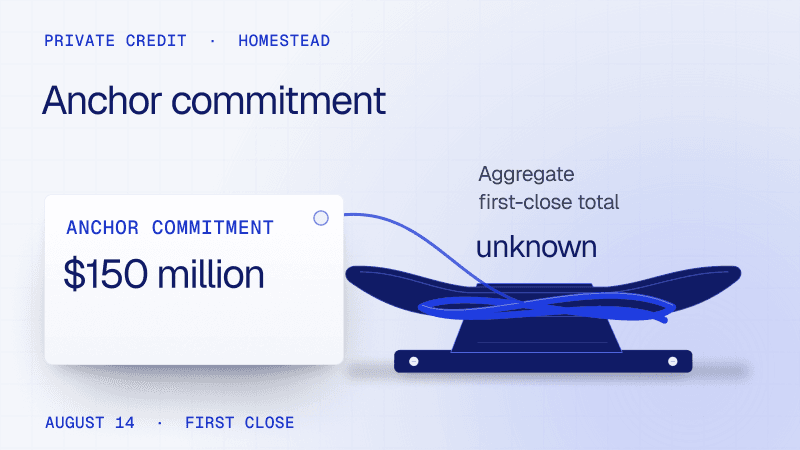
Four Q3 private-credit announcements distinguish first and final closes, related vehicles, leverage, anchor commitments and cumulative series figures.
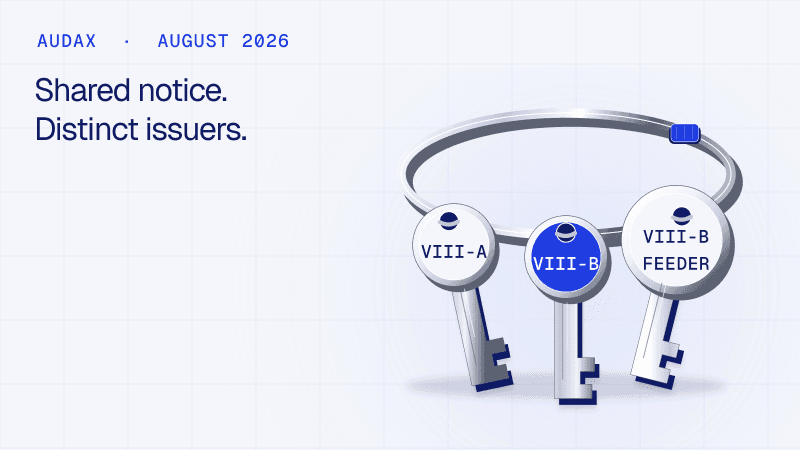
August 2026 SEC fund notices compared using original filings, with first-sale dates, reported sales and shared-issuer boundaries kept separate.
Audax, Oaktree and Ares announcements use different capital definitions. Separate equity, leverage, related vehicles and strategy scope before comparing.
Compare selected Q3 NVIDIA and OpenAI records while separating prospective capital, investment values, conditional guarantees and future operating capacity.
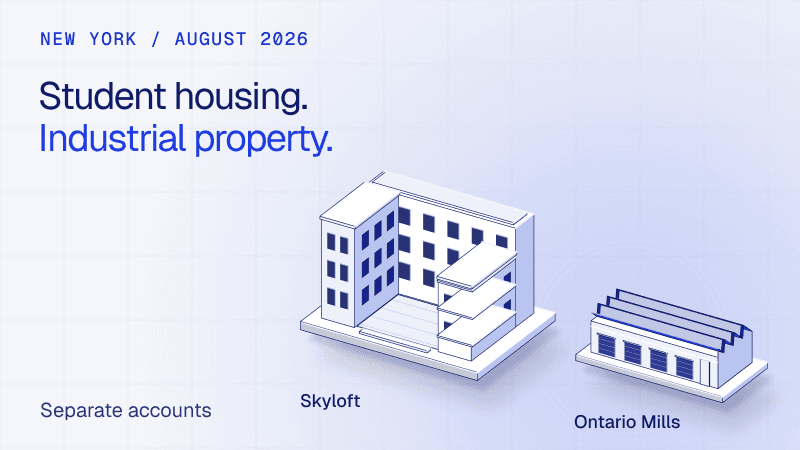
August 2026 NYCRF records separate fund investments, property acquisitions, commitment ceilings and cash movement using original pension disclosures.
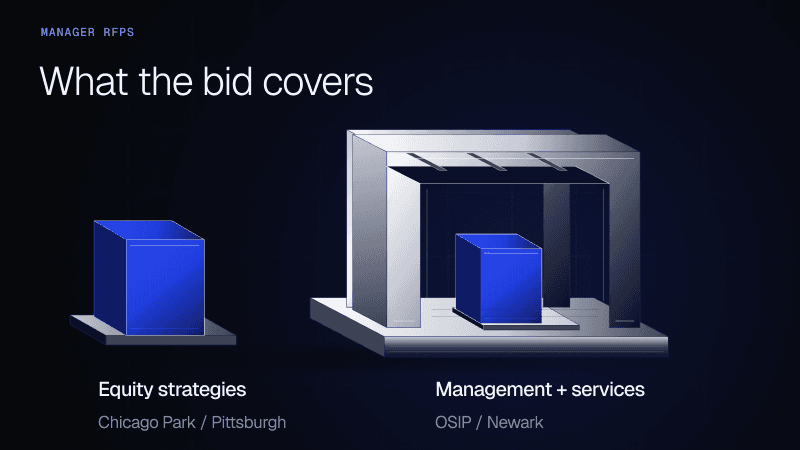
Source-checked October 2026 investment manager RFPs: Chicago Park, Pittsburgh and Rhode Island deadlines, strategy requirements and expired-search exclusions.
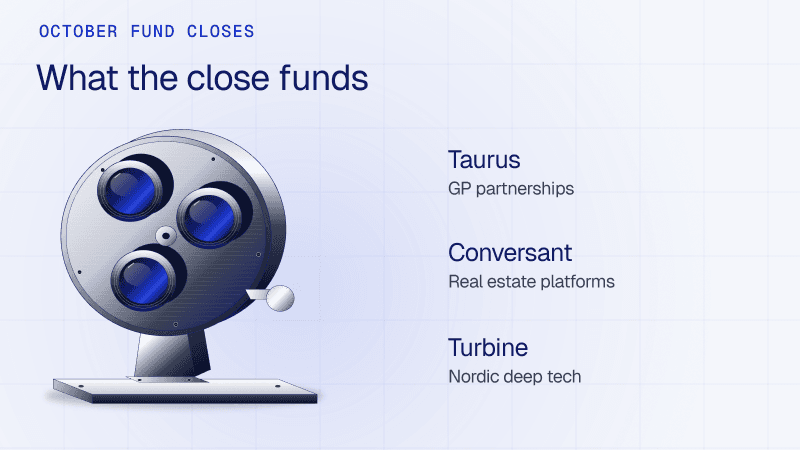
Three October final-close announcements show why commingled commitments, co-investment vehicles and earlier fundraising targets need separate comparisons.
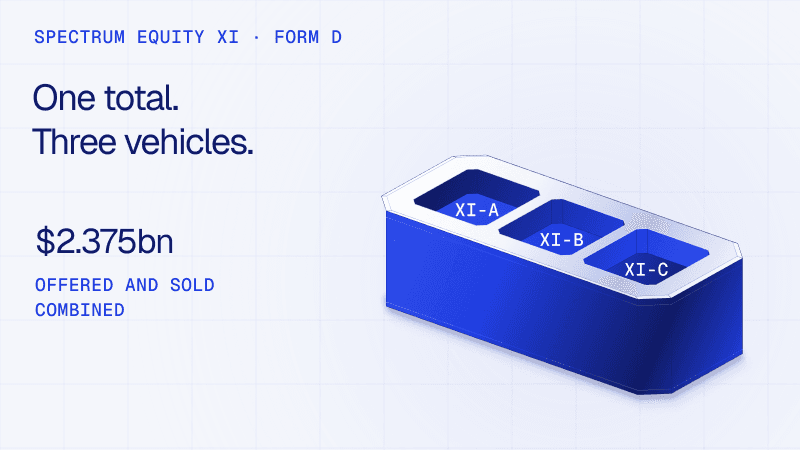
Four SEC notices show why filing dates, first sales, amendments and combined parallel vehicles require separate fields in private-fund research.
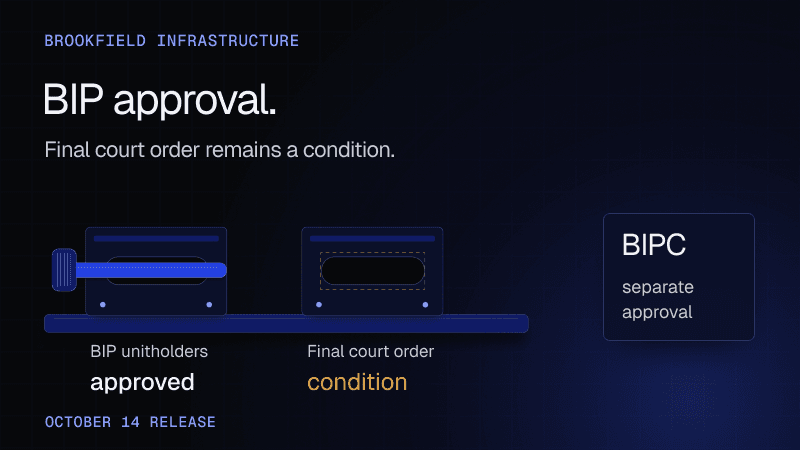
Separate BIP approval, the BIPC vote and court conditions, with a documented conflict in Brookfield Infrastructure’s published meeting times.
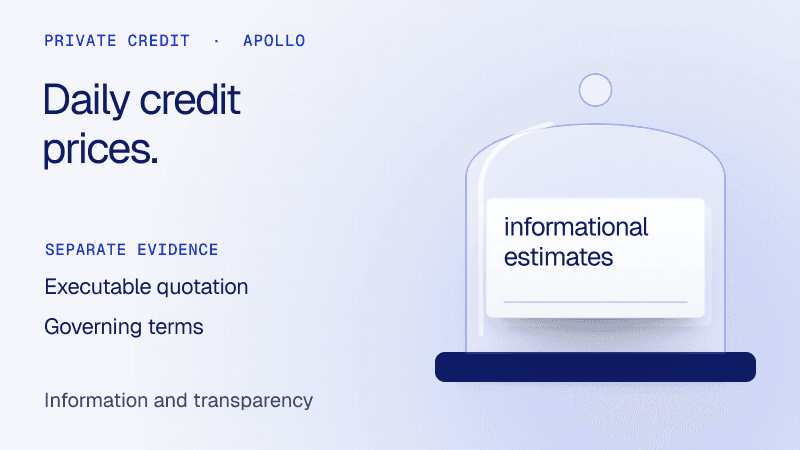
Examine Apollo's October credit-pricing announcement using original sources. Check fund terms, expected delivery dates and the meaning of internal estimates.
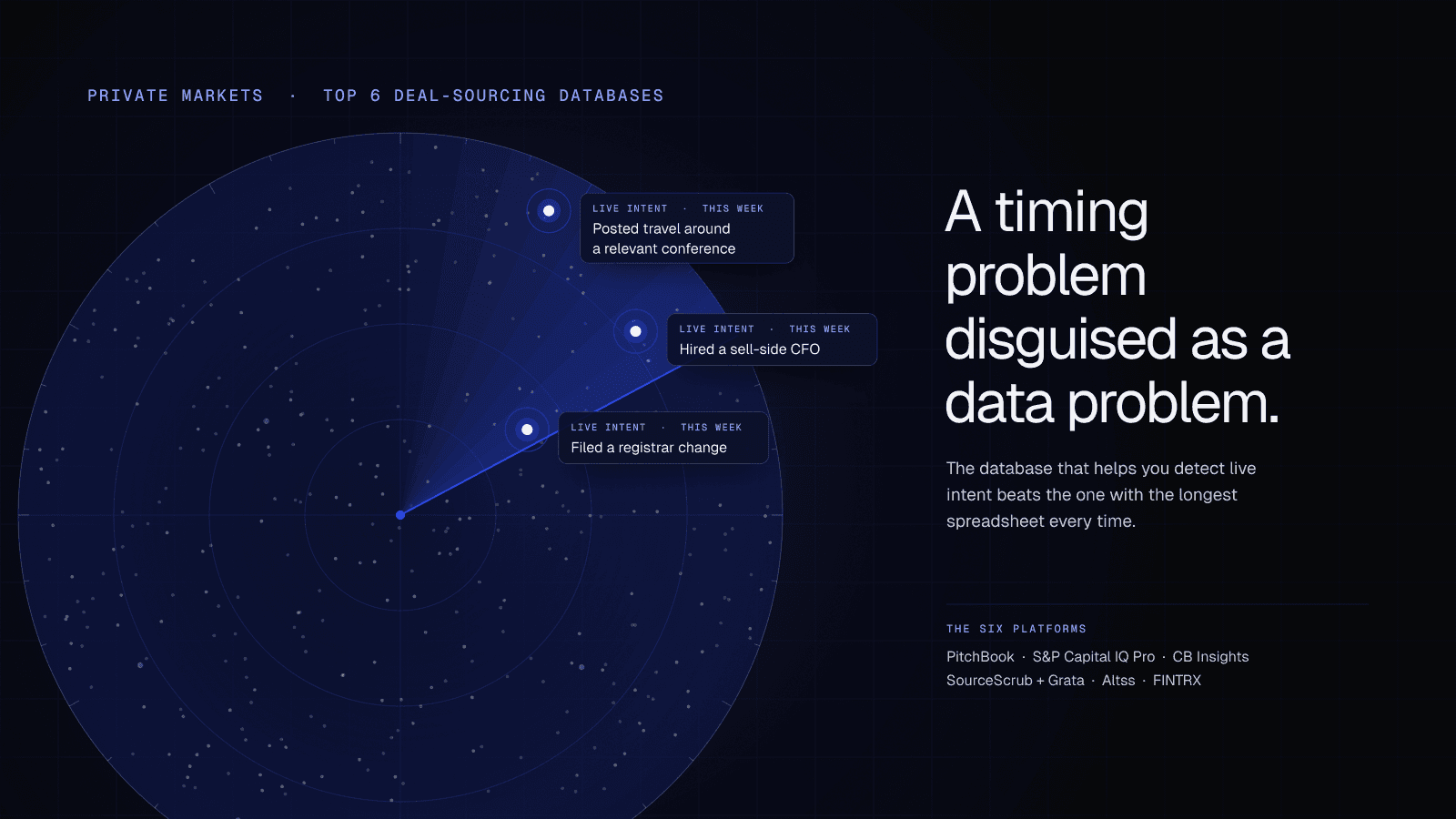
Updated for 2026: the six platforms buy-side teams actually use—PitchBook, S&P Capital IQ Pro, SourceScrub, Grata, CB Insights, and Altss—with ownership ch
Public records carry source-specific dates where available. No population-wide measured refresh cadence or universal verification deadline is established here. Page modified, source captured, fact observed, entity verified and aggregate measured describe different events. Check the date attached to the relevant claim; a missing verification date means unknown. Stored source history does not establish a customer-facing historical-analysis interface.

