
Carlyle’s July repurchase: why a 5% offer filled 42% of tendered shares
Carlyle’s July 2026 repurchase filled 42.3% of tendered shares. Its filed results show why that improved ratio came with a smaller reported payout.
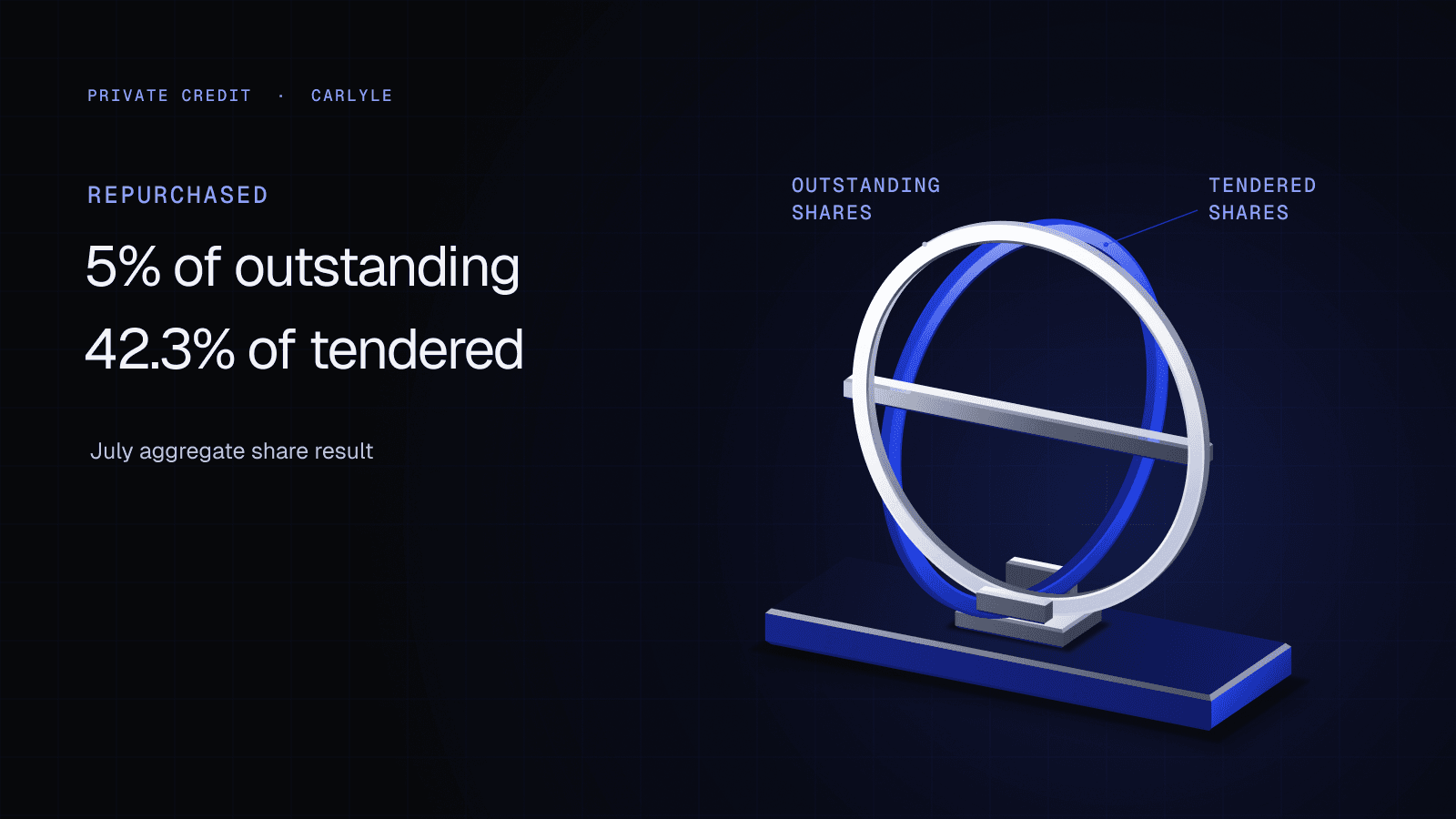
Carlyle Tactical Private Credit Fund repurchased 27,865,369 shares in its offer priced July 7, 2026, against 65,877,260 shares tendered. That bought approximately 42.3% of the shares submitted. The fund’s reported 5% repurchase was a percentage of its outstanding shares, a different denominator from the requests it received.
The July outcome also shows why a higher fulfillment ratio can coexist with a smaller payout. Compared with April, tendered shares fell much faster than repurchased shares. For wealth-platform research teams and portfolio managers, those are separate findings: more of the submitted shares were bought, while the fund’s reported aggregate consideration declined.
What the July offer actually completed
The fund’s June 30 semiannual report, filed on August 21, places the July repurchase in its subsequent-events note. The report records 11.82% of outstanding shares tendered and 5.00% repurchased. Aggregate consideration was $223.611 million: the table reports $223,611 in thousands of dollars.
The offer’s pricing date was July 7. Its presence in a June 30 report does not move the transaction into June. It is a completed calendar-Q3 event disclosed after the financial reporting date.
The difference between tendered and repurchased shares was 38,011,891. That is a count of shares not repurchased in this offer. It is not a dollar balance, a new fundraising commitment or evidence that those same holders submitted the same shares at the next window.
A better ratio with fewer shares repurchased
The same report supplies two earlier observations:
- January 6: 28,555,902 shares tendered and the same number repurchased. The reported 4.93% of outstanding shares tendered fit within the 5.00% offer.
- April 7: 89,867,869 shares tendered and 28,703,006 repurchased, or approximately 31.9% of tendered shares. The report shows 15.65% of outstanding shares tendered against 5.00% repurchased.
January and April provide prior-quarter context for the July result. They are not additional Q3 events. From April to July, tendered shares fell about 26.7%, while repurchased shares fell about 2.9%. The aggregate share-fulfillment ratio consequently rose from roughly 31.9% to 42.3%.
Reported consideration moved the other way: $230.864 million in April versus $223.611 million in July, a decline of $7.253 million. The improved ratio therefore describes a larger fraction of a smaller request total. It does not establish an increase in the amount paid. Nor does the repurchase table alone explain whether portfolio realizations, borrowing, subscriptions or other resources financed the purchases.
The offer leaves room for different holder outcomes
The June 16 notice offered to buy up to 5% of outstanding shares. If requests exceeded that amount, the fund could buy an additional amount of up to 2% of outstanding shares, but was not required to do so. That discretion did not promise a 7% repurchase.
The notice also allowed the fund to accept all shares tendered by holders owning fewer than 100 shares who tendered their entire position, before prorating other requests. The calculated 42.3% is therefore an aggregate ratio of repurchased to tendered shares, not proof that every account received that percentage. The notice expected payment within seven calendar days of pricing; that timetable is distinct from the amount an investor could sell.
For a product comparison, keep both liquidity measures visible: the share of the fund repurchased and the share of submitted requests fulfilled. Add the reported consideration and the actual pricing date. A standing offer percentage describes the vehicle’s terms; the completed result shows how those terms met demand in one window. The distinction complements Apollo’s pricing-versus-liquidity case, where a more frequent price did not establish a right to obtain cash.