
Investor AB in Q3: reinvesting in companies and financing EQT funds
Investor AB’s Q3 2026 capital uses connect Patricia company reinvestment, its EQT shareholding and fund funding. Each calls for a different investment case.
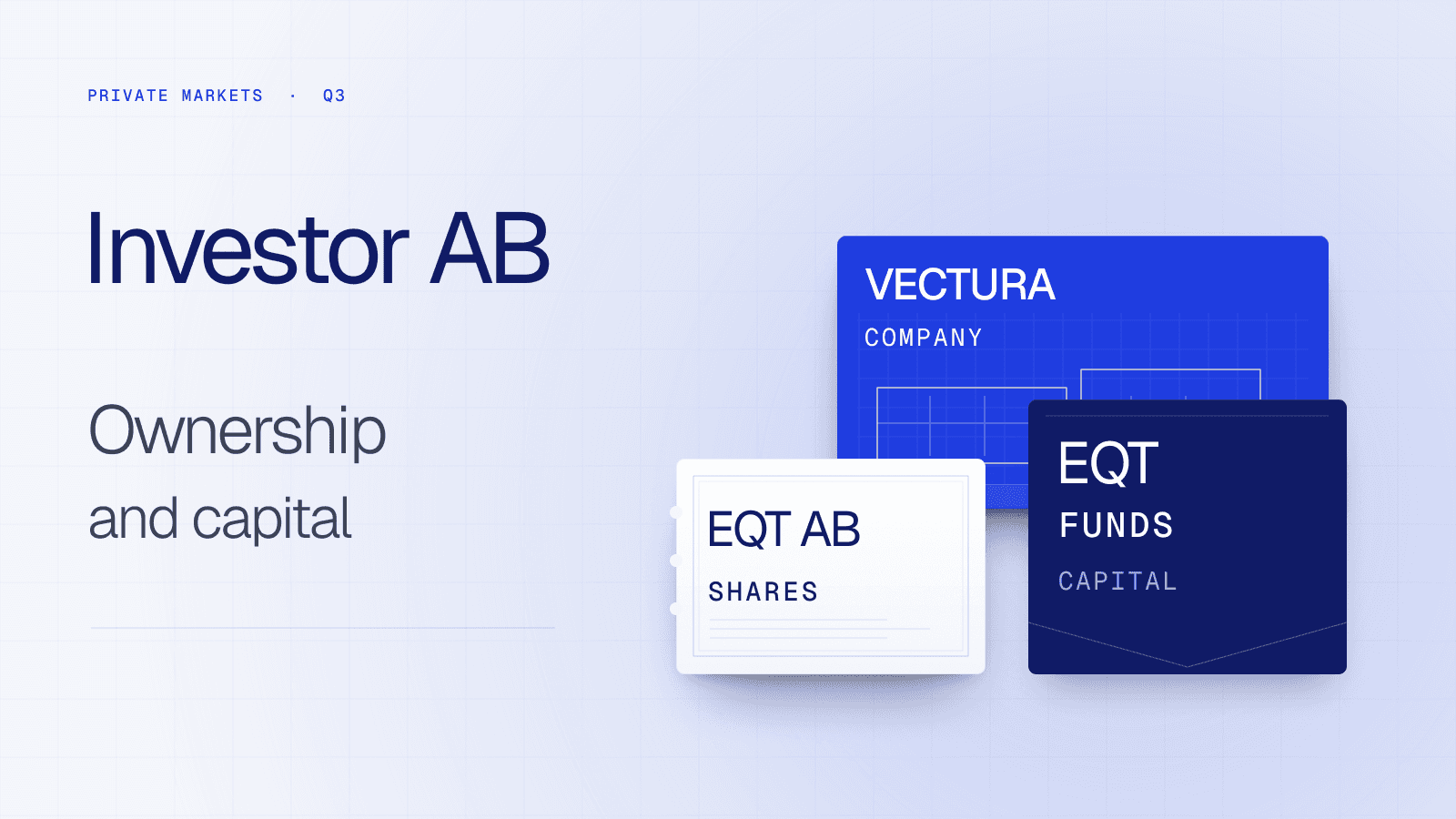
Patricia Industries invested SEK 500 million in Vectura alongside a development project for Saab during Q3 2026. It also received a SEK 550 million distribution from Permobil. Elsewhere in Investor AB’s portfolio, the Investments in EQT category reported a SEK 663 million net cash outflow while increasing 7 percent in value. The first two figures concern separate operating-company transactions; the latter two describe the broader EQT investment category. They establish neither a funding offset between the companies nor a standalone total of fund calls.
The January–September statement, released on October 16, presents an owner making several kinds of capital decision at once. For an investment team assessing Investor AB, those decisions provide a more useful starting point than the size of its private-asset holdings: which company needs capital, what does ownership of the manager deliver, and how does the fund relationship use or return capital?
Patricia’s capital moves through operating companies
Vectura’s project in Jönköping for Saab gives the SEK 500 million investment a specific operating purpose. Permobil’s distribution shows capital returning from a different company. Together, the transactions illustrate an industrial owner’s continuing job of supporting development while receiving returns from its businesses.
The company receiving the investment is central to the proposition. A Vectura financing case needs to explain the development project and the business it supports. A distribution from Permobil says something about a different company’s capacity to return capital; it does not supply the investment rationale for that project.
Investor’s business-area strategy prioritizes profitable growth in Patricia’s existing companies and remains open to new subsidiaries in prioritized industry segments. That combines an ownership portfolio with room for company selection. It makes the relevance of a project or acquisition to the existing businesses an important diligence question. The same distinction matters when considering KIRKBI’s ownership of climate businesses: operating-company development and a specialist fund commitment require different investment cases.
A 14 percent manager stake reaches a different business
Investor reported an EQT AB holding of 14.0 percent of capital and votes at September 30, separately from its EQT fund investments. The shares provide exposure to the manager’s business. The fund positions provide exposure to its investment strategies and their capital requirements.
EQT’s October 15 operating announcement helps explain what matters to the manager shareholder. EQT says its financial model is primarily affected by fee-generating assets under management, fund performance and its ability to recruit and retain talent. Its increase in fee-generating AUM included €34 billion from Coller Capital, consolidated from August 31 following the transaction’s closing.
That is a change in the business perimeter of the manager Investor partly owns. Acquisition-led expansion of the fee base is economically different from Investor supplying additional capital to an EQT fund. The €34 billion describes Coller’s contribution to EQT’s fee-generating AUM, not an investment amount paid by Investor AB.
Activation timing provides a second distinction. EQT said EQT XI would begin contributing to fee-generating AUM only upon activation, expected within the next few months. Fundraising progress and the start of that fee-generating contribution can therefore fall at different points. A manager-shareholder assessment needs to understand when products enter the fee base; a fund-investment assessment needs to understand the strategy and the investor’s funding commitment. EQT’s quarterly announcement supplies operating measures rather than quarterly financial statements, so this is an explanation of business drivers rather than a reported Q3 profit bridge.
The fund relationship has its own funding cycle
Investor’s July 16 half-year report recorded SEK 520 million of second-quarter net cash inflow from Investments in EQT. The Q3 statement’s SEK 663 million net outflow reverses that reported direction. The CEO explains that drawdowns exceeded fund proceeds, and the statement records no Q3 purchases of EQT AB shares.
Investor’s EQT fund information is presented with a one-quarter lag, as of June 30, 2026. The reported quarterly comparison should retain that dating rather than assign the underlying fund transactions to July–September. The useful observation is the coexistence of funding needs and rising reported value: an established investment relationship can require capital while contributing positively to the portfolio’s valuation.
Investor describes fund cash flows as lumpy, depending on whether funds are investing or exiting, and says it will continue selectively investing in future funds. That makes the ongoing commitment and investment cycle relevant to diligence. Sofina’s fund-portfolio analysis addresses the related task of connecting valuations with cash flows and uncalled capital.
For a company proposition, an origination memo should identify the operating recipient, the use of capital and its fit with Patricia’s ownership portfolio. For a fund proposition, it should identify the strategy, vehicle and reason for adding that relationship alongside the established fund investments. Investor’s manager shareholding and company portfolio help frame those questions; they do not establish an open mandate for another manager.


See the allocators behind your next close.
Public records carry source-specific dates where available. No population-wide measured refresh cadence or universal verification deadline is established here. Page modified, source captured, fact observed, entity verified and aggregate measured describe different events. Check the date attached to the relevant claim; a missing verification date means unknown. Stored source history does not establish a customer-facing historical-analysis interface.