
Q3 2026 infrastructure closes: capital already committed
KKR, Partners Group and CIP reached Q3 final closes with portfolios already taking shape. Their actual investments reveal different operating and development exposures.
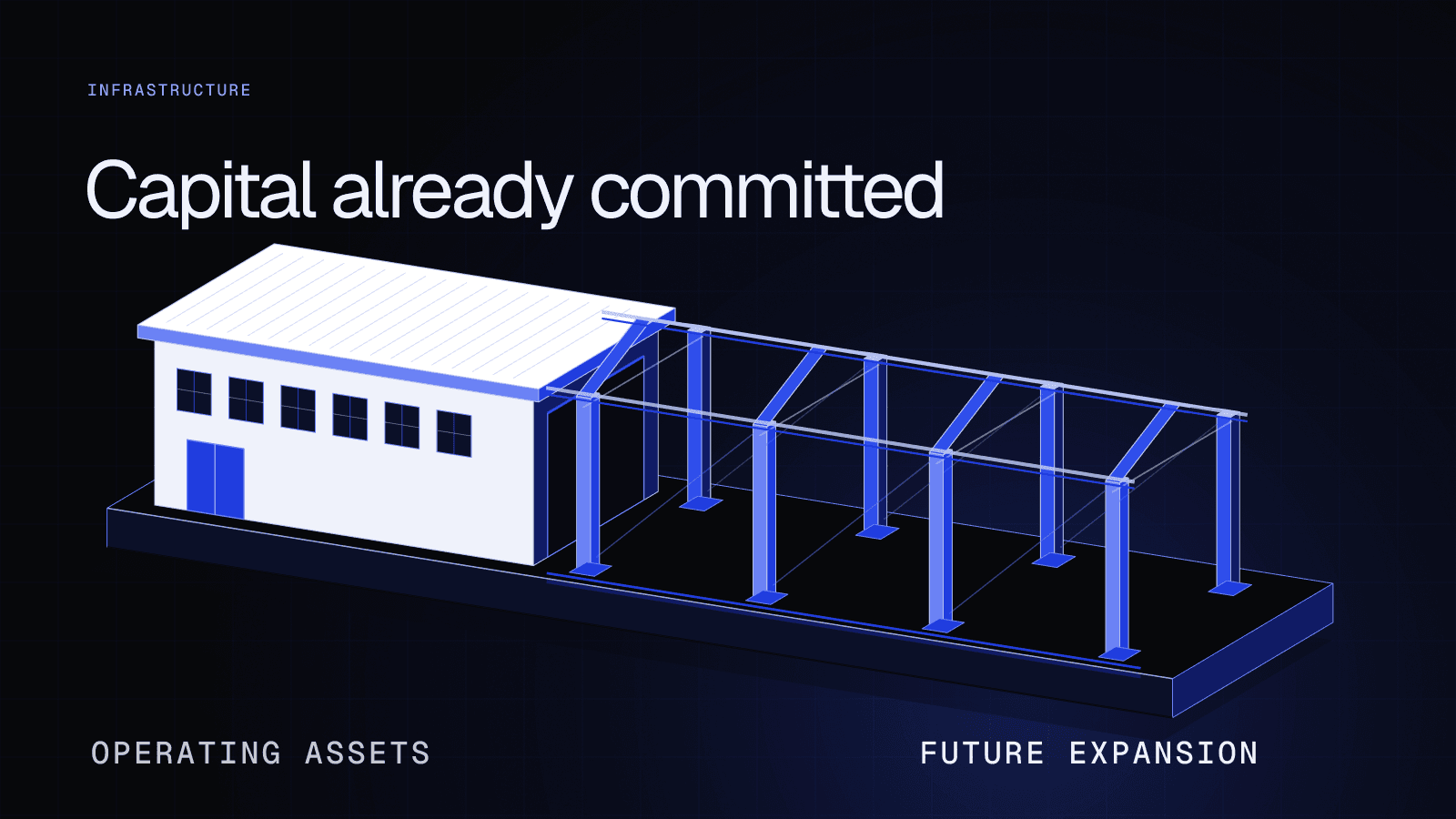
KKR’s $19.2 billion infrastructure fund had already committed more than $9 billion to investments when it announced its August 3 final close. Copenhagen Infrastructure Partners reported $1.6 billion committed across nine investments when its roughly $3 billion Growth Markets Fund II and associated vehicles closed on August 14. Partners Group’s fourth direct infrastructure program, which closed in July at more than $15 billion, was already over 40% committed. These fundraises already had substantial investment selection behind them.
The portfolio detail changes the comparison. KKR’s Core+ strategy names an integrated renewable-energy business with operating assets and development capabilities. Partners Group is building mid-market power, data-center and storage platforms. CIP’s greenfield mandate already encompasses commissioning, construction and project financial-close milestones. For an infrastructure LP, the consequential question is how existing operations and future expansion fit together inside the investment proposition.
KKR: a Core+ fund can own a development engine
KKR announced the final close of Global Infrastructure Investors V on August 3. It describes the $19.2 billion vehicle as Core+, investing primarily in North America and Western Europe. Its stated focus is critical-service businesses and assets with high barriers to entry and expected resilient cash flows.
The fund had committed more than $9 billion across a named portfolio that included EDF power solutions North America, Enilive, FiberCop, Metronet and Sempra Infrastructure. The $9 billion floor alone is approximately 47% of the final-close amount. That is a reference point for deal commitments, not a measurement of LP capital already called or cash invested.
EDF illustrates why the Core+ label does not fully describe the underlying business. In a June 30 agreement announcement, KKR valued the equity interests in EDF’s U.S. and Canadian renewable operations at approximately $4.2 billion, with potential additional payments of up to $390 million. The businesses owned and operated solar, wind and battery-storage assets, while their integrated platform also covered project development, construction, long-term operations and maintenance, and asset management.
An LP underwriting that exposure is therefore evaluating more than an inventory of operating generation assets. The platform contains the capabilities to originate and deliver additional projects. The relevant distinction is the contribution of existing operations versus future development, not a presumption that an established infrastructure business has no construction exposure.
The June announcement said the transaction was subject to customary closing conditions and regulatory approvals and would be funded from KKR’s global infrastructure strategy. The later Fund V release names EDF among committed investments; it does not allocate the $4.2 billion transaction value to Fund V. Neither announcement should be used to assign that entire purchase price as the fund’s equity check or to establish a subsequent acquisition-completion date.
Partners Group: three ways to invest in the power constraint
Partners Group’s July 20 final close covered more than $15 billion across a closed-ended fund and bespoke solutions investing alongside. The announcement describes a mid-market direct-infrastructure strategy focused on building energy, utility and other infrastructure platforms. It does not present a standalone closed-ended-fund amount.
More than 40% of the program was committed across 11 seed assets. The three examples named in the announcement approach power and digital capacity through different businesses:
- Life Cycle Power supplies mobile power generation to U.S. data-center and industrial customers facing grid constraints.
- Digital Halo is a Singapore-based data-center platform serving regional cloud and AI demand in Asia.
- green flexibility develops large-scale battery-storage systems in Germany to support grid flexibility.
Those businesses can share an electricity-demand theme without sharing an operating model. One supplies mobile generation, another provides data-center capacity, and a third develops storage. For a prospective LP, the theme is the starting point for examining where expansion spending sits and which operating capabilities a platform must build. It is not a substitute for those questions.
The same distinction matters to an originator seeking capital. A storage-development platform and a mobile-power company offer different ways into the infrastructure opportunity, even when both respond to constrained electricity supply. This is company-building equity exposure; the contract and financing structures in Altss’s Q3 AI infrastructure analysis answer a different investment question.
The program’s bespoke solutions also matter when assessing scale. The headline describes the capital raised around the strategy, rather than proving that every dollar sits in one commingled vehicle. Similar fund-and-related-vehicle distinctions appear in Altss’s Q3 buyout-close comparison. Here, however, the analytical point is what the already-seeded program is building.
CIP: greenfield describes the strategy, not every asset’s current stage
CIP announced the final close of Growth Markets Fund II on August 14. The approximately $3 billion figure includes the fund and associated vehicles. Its mandate targets large-scale energy infrastructure in 15 selected high-growth, middle-income markets across Eastern Europe, Asia and Latin America. CIP explicitly describes the Growth Markets strategy as greenfield investing.
The $1.6 billion already committed across nine investments was roughly 53% of the approximately $3 billion fundraising perimeter. That approximate relationship helps show how much investment selection had occurred; it is not a standardized deployment ratio to rank against the other two managers.
The portfolio examples make the development mandate concrete. CIP reported commissioning a standalone battery project in Chile, commencing construction on solar and battery-storage projects in Mexico, and reaching financial close on the Pestera II onshore wind project in Romania. A single greenfield strategy thus contained projects at different milestones by the time fundraising finished.
This is the inverse of the EDF observation. Owning an established operating business can also bring a development pipeline; investing through a greenfield strategy does not mean every project remains at the earliest development stage. An LP needs the project-stage distribution and remaining delivery obligations to understand the portfolio, rather than treating either label as a complete risk description.
CIP also expected GMF II to become fully committed within one to two years. That was the manager’s August expectation, not evidence that all capital was committed by October or that the projects would be operational on that timetable.
The investment choice behind the final close
These three July and August announcements fall within Q3 2026. They are selected infrastructure-equity records, not a census of the quarter or a pooled fundraising total. KKR’s single-fund figure, Partners Group’s program and CIP’s fund-plus-associated-vehicles figure retain their different perimeters.
Their common analytical value is the visibility into investments already selected. A prospective LP can examine a committed portfolio alongside the manager’s remaining discretion. The investment decision concerns both the assets or businesses already underwritten and the work still required to expand, construct or operate them.
For a GP explaining its mandate, that means connecting the strategy to an actual ownership and delivery model: existing operations with an integrated development engine, mid-market platform building, or greenfield project execution across selected markets. The source-defined labels remain useful, but the portfolio makes the choice intelligible.


See the allocators behind your next close.
Public records carry source-specific dates where available. No population-wide measured refresh cadence or universal verification deadline is established here. Page modified, source captured, fact observed, entity verified and aggregate measured describe different events. Check the date attached to the relevant claim; a missing verification date means unknown. Stored source history does not establish a customer-facing historical-analysis interface.